



OC Kitchen Lab · Ingredient Encyclopedia
Thyme
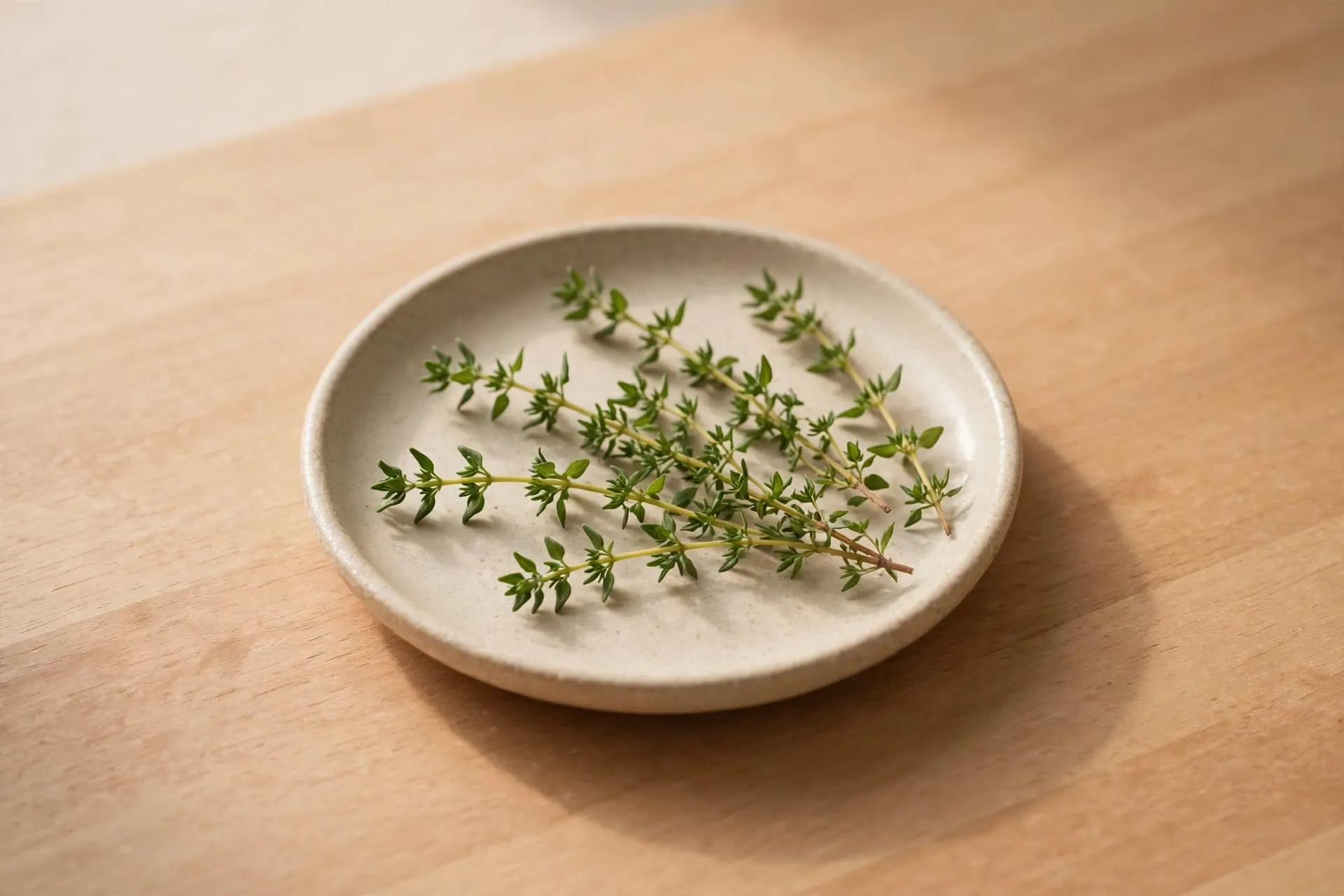
Woody herb with a savoury, earthy aroma.
Herbs & Spices
Origin
Mediterranean region.
Season
Evergreen perennial; fresh or dried year-round.
Culinary uses
Roasts, braises, stocks, infusions. Add sprigs to roasts, stews, and soups for warm, earthy flavor. Strip leaves into sauces and dressings, or scatter over roasted vegetables and potatoes.
Fun fact
Add sprigs early to long-cooked dishes and remove stems. To strip thyme, pinch a sprig at the top and pull down — the leaves come off easily.
Thyme is earthy and warm, with small leaves and a strong, fragrant aroma. It adds depth to slow-cooked dishes without overpowering them. A few sprigs can change a whole pot of soup or roast.
Where it grows
Native originGrowing / production
Native: Greece, Italy, Morocco. Growing: Morocco, Spain.
Variations
- Common thyme – classic, earthy, for cooking
- French thyme – delicate, sweet, for French dishes
- Lemon thyme – citrusy, for fish and chicken
- Wild thyme – strong, for Mediterranean dishes
- Creeping thyme – low, for garnish and teas
Nutrition
Thyme
Basis: 100 g
101 kcalCalories
5.6 gProtein
1.7 gFat
24 gCarbs

 French Onion Soup
 Garlic Butter Mushroom (Bruschetta à la forestière)
 Paella Valenciana (Chicken, Rabbit & Saffron Rice)
 Ribollita (Tuscan Bread and Vegetable Soup)