


The printer starts again before you’ve read the first ticket. Table six is ready for mains. Table nine has just ordered. The fish cook says two minutes. The grill says five. Then someone from the floor leans over the pass and asks if table six can have one more minute.
What I want to hear at that point is one clear call. “Hold six. Fire nine. Tell me when the grill is two minutes out.” Now everyone knows which table they’re working on and when their part needs to be ready. Five seconds ago, three people were doing their jobs perfectly and still about to send out a table in instalments.
By Jan · Tales of Interest
A chef plates a dish. Photo by stu_spivack.
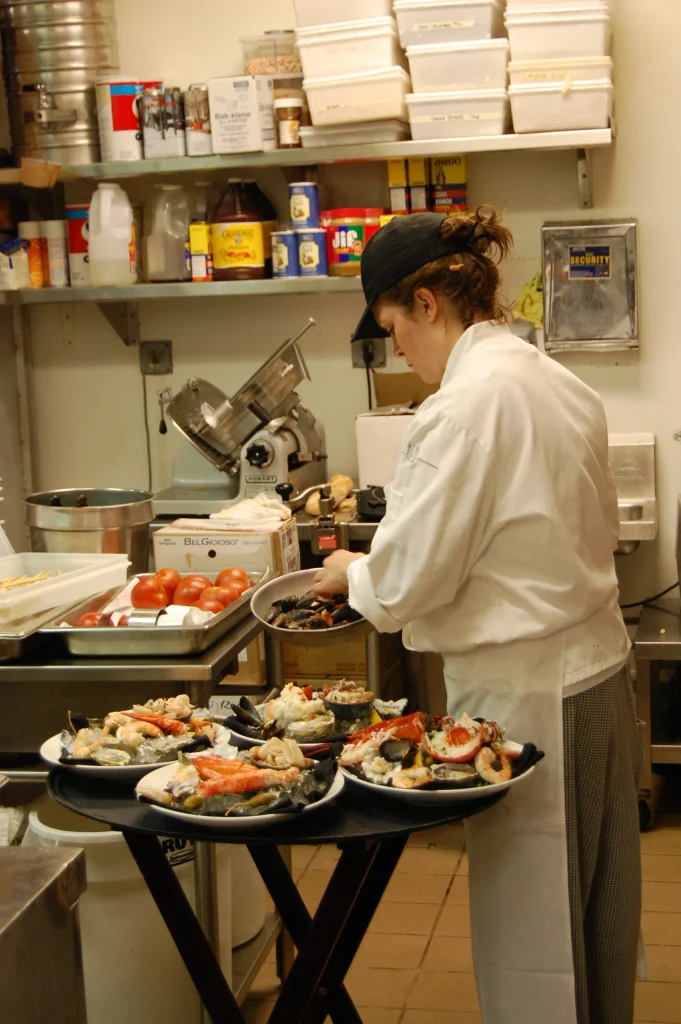
Four plates, one table
From the dining room, four main courses arrive together. From the pass, one plate has been waiting for its sauce, another is still in the pan, and someone is trying to find out whether the missing side is on its way or hasn’t been started. A cook can see what’s happening at their station. The person calling the pass has to see the whole table.
That matters even in a kitchen with three people. Before service, I’d rather spend two minutes agreeing who calls the orders and what “ready” means. To me, “ready” means I can put the plate in a server’s hands. If the fish is cooked and the garnish is still on the stove, tell me the fish is cooked. That’s useful information. “Ready” would send somebody to the pass for a plate they can’t take.
Escoffier put it on paper
When I read about Auguste Escoffier, the bit that stayed with me was the paperwork. In his 1903 Le Guide culinaire, he included sample service sheets for the saucier, who handled sauces, and the garde-manger, the cold station. Kitchen brigades already existed. Escoffier’s service sheets show how he organised the work within them, turning the day’s menu into specific instructions for each station. Musée Escoffier on his service sheets
On 10 November 2026, the Dîner d’Épicure at the Hôtel Negresco in Nice marks the 180th anniversary of his birth. Virginie Basselot is cooking with young chefs from the Côte d’Azur. I’d love to hear the thirty seconds before a course goes out. Who calls it? Which station answers last? What does the team do if that answer is “I need another minute”?
Dîner d’Épicure at the Negresco
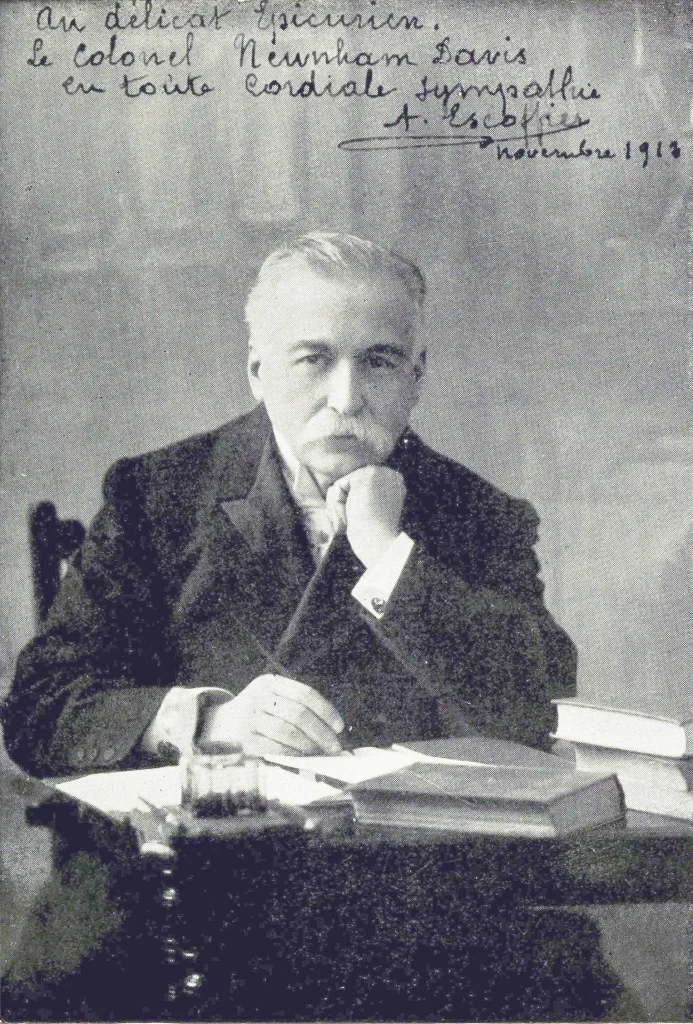
Auguste Escoffier, from The Gourmet’s Guide to London (1914). Photographer unknown.
The call I want to hear
When the tickets pile up, I want to know three things. Which table are we sending next? Which plate will take the longest? Does the floor know if we’re running late?
And if the grill needs another minute, I want to hear that while the fish is still in the pan. That’s when I can do something with it.
