

OC Kitchen Lab · Ingredient Encyclopedia
Beetroot
Earthy, sweet, and beautifully deep in color
Vegetables
Origin
Cultivated from wild sea beet around the Mediterranean.
Season
Best in autumn and winter, with young beets in late spring.
Culinary uses
Roast beets until tender and toss them into salads for sweetness and color, or grate them raw into slaw for crunch. Blend roasted beet into soup for a smooth, velvety texture and a vivid ruby color.
Fun fact
Beets stain hands and cutting boards easily, so a little oil rubbed on your hands first helps the color wash off more quickly.
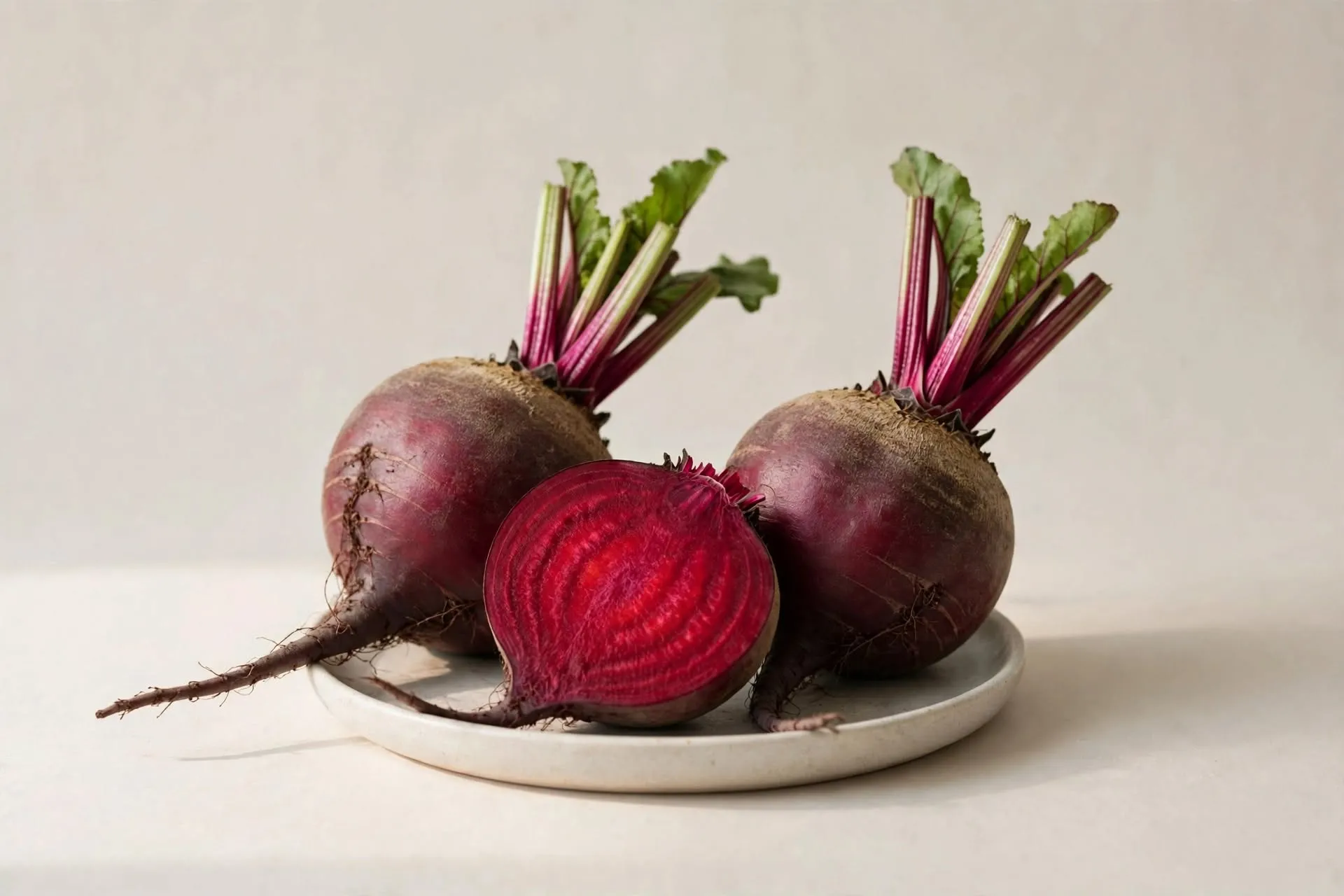
Beetroot is earthy and naturally sweet, with a firm texture that softens into something silky when roasted. Its deep ruby color makes even simple dishes look striking on the plate. It brings a warm, grounded sweetness that pairs well with fresh, tangy, and creamy flavors.
Where it grows
Native originGrowing / production
Native: Greece, Italy, Turkey. Growing: Poland, Russia.
Variations
- Red beet – classic, deep red, earthy and sweet
- Golden beet – yellow, milder, less staining
- Chioggia – striped pink-white inside, sweet and pretty
- Baby beet – small, tender, quick to cook
- White beet – pale, mild, for salads
- Sugar beet – very sweet, for sugar production
- Beet greens – leaves, fresh, like chard
Nutrition
Beetroot
Basis: 100 g
43 kcalCalories
1.6 gProtein
0.2 gFat
9.6 gCarbs