



OC Kitchen Lab · Ingredient Encyclopedia
Bay Leaf
Warm, woody, and slow
Herbs & Spices
Origin
From the Mediterranean, from the bay laurel tree.
Season
Available dried year-round, fresh in summer.
Culinary uses
Add a bay leaf to soups, stews, and braises. Simmer it in rice, beans, and stocks, then remove it before serving.
Fun fact
One bay leaf is usually enough, two can already make a dish taste too strong.
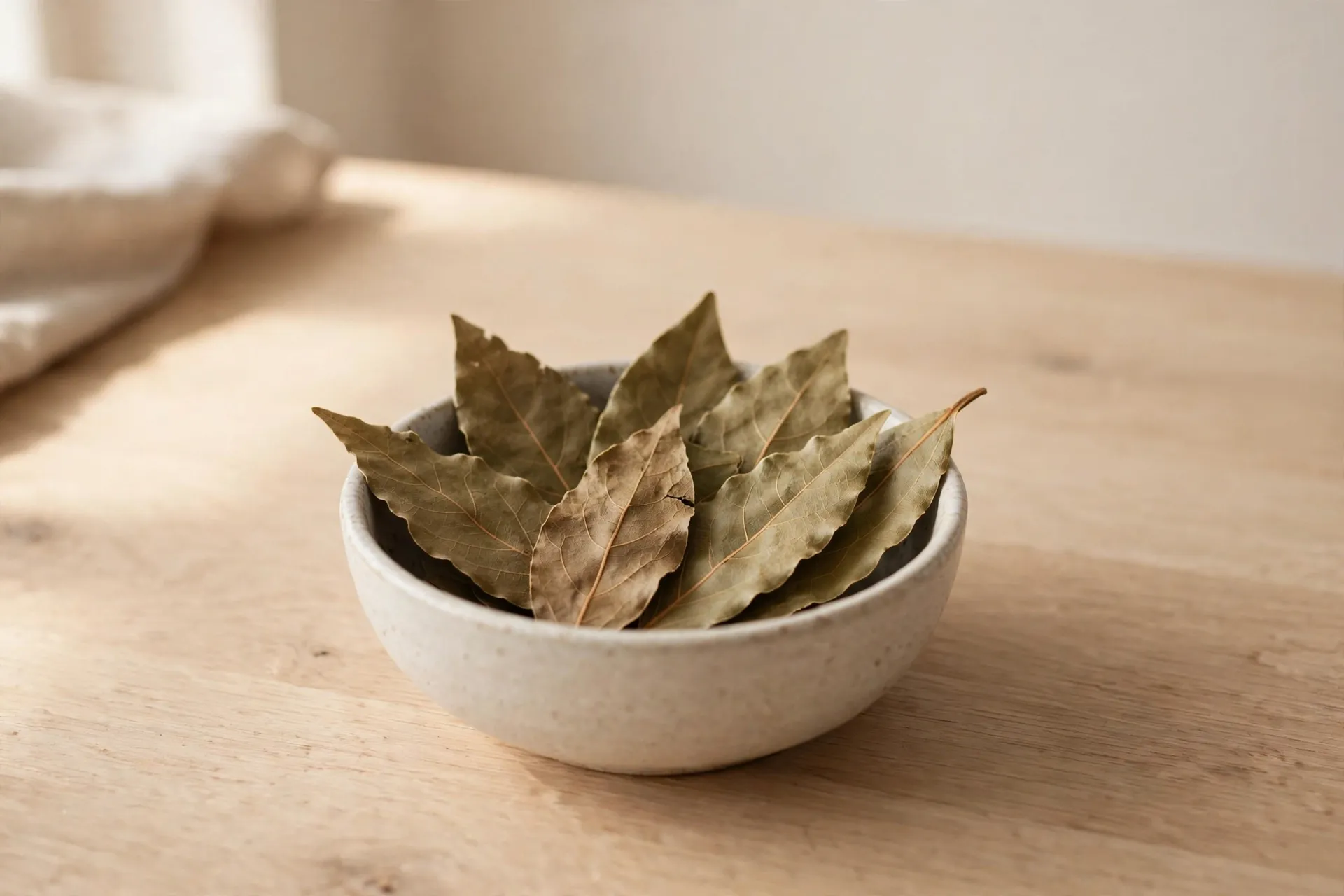
Bay leaf is warm and woody, with a gentle, herbal aroma. It flavors soups, stews, and sauces slowly as they simmer. It is always removed before serving, after it has done its work.
Where it grows
Native originGrowing / production
Native: Greece, Italy, Turkey. Growing: Greece, Morocco, Turkey.
Variations
- Dried – strong, woody, for stews
- Fresh – milder, greener, for sauces
- Turkish – mild, tea-like, for soups
- California – stronger, eucalyptus-like, use half
Nutrition
Bay Leaf
Basis: 100 g
313 kcalCalories
7.6 gProtein
8.4 gFat
75 gCarbs

 Lohikeitto (Finnish Salmon Soup)
 French Onion Soup
 Gigantes Plaki (Greek Baked Giant Beans in Tomato Sauce)