
Part One · The First 60 Days
An Online-Chef Story · Behind the Restaurant
Some restaurants begin with a business plan. This one began with a bakery that never opened.
A few years ago, I first heard about Mrs. A. idea to open a boulangerie. My wife, Leyla, was working with her at the time and mentioned that her husband was a professional chef who might be able to help. We had a few conversations, discussed some possibilities, and then… nothing happened. The bakery never opened. Life went on, and I didn’t think much about it.
Until a few months ago, when Leyla came home with a familiar sentence: “Anna has another idea. She wants to talk to you.”
Now, after more than 25 years in professional kitchens, I know that sentence can mean absolutely anything. From a small café with three sandwiches to a restaurant concept that will take months of planning. But I was curious, and that’s how this particular adventure began.
At the time, I had no idea that a few months later I’d be standing inside an empty restaurant in Beausoleil, with the keys in my pocket, a twelve-item menu under development, and a professional kitchen supplier helping turn our ideas into something real.
But I’m getting ahead of myself. Let’s start at the beginning.
When an Idea Meets a Chef
The first conversations were about something that sounded quite simple: healthy food, a modern lifestyle, and a restaurant that would fit naturally into the world of wellness and longevity. Anna already had her own vision, and my role was to help turn the food side of that vision into something that could actually work.
Now, I have nothing against beautiful ideas. In fact, I love them. Every interesting restaurant starts with somebody imagining something that doesn’t exist yet. The trouble begins when imagination meets a professional kitchen, a limited budget, a delivery arriving late, and three customers who all want something different at exactly the same time.
After more than 25 years in hospitality, I have learned one important thing: a restaurant is not just about food. It’s about everything that happens before, during and after that food reaches the table. And most of those things are completely invisible to the customer.
So, while we were discussing dishes, ingredients, presentation and the atmosphere of the future restaurant, another part of my brain was already asking less glamorous questions. Who is going to prepare everything? Where will we store it? How many different ingredients will we need? Can the same preparation be used in several dishes? What happens when five orders arrive together? And, perhaps most importantly, can we repeat the same quality tomorrow, next week and six months from now?
I suppose that’s the difference between imagining a restaurant and having spent most of your working life inside one. You can’t stop seeing the machinery behind the beautiful plate.
Twelve Dishes and a Thousand Questions
As our discussions continued, the food concept gradually started taking shape. We wanted something fresh, attractive and connected to the philosophy of health, but without forgetting one rather important detail: people still want to enjoy eating.
Healthy food doesn’t have to be boring, and it certainly doesn’t have to look like punishment for having enjoyed a good dinner the night before.
We eventually developed a focused menu of twelve items, combining breakfast ideas, fresh salads, warm dishes, sourdough creations and desserts. Bone broth, overnight oats, shakshuka, salmon, Wagyu beef, cheesecake and homemade Greek yogurt ice creams all found their place in the concept.
It might sound like a rather unusual family of dishes, but that was part of the challenge. Different food styles had to become one coherent restaurant experience, rather than twelve independent recipes sharing the same menu.
And that’s where the real work began.
/i
Writing down twelve dishes is easy. Making twelve dishes work together in a professional kitchen is something else entirely. Every ingredient needs storage, every preparation takes time, every finished plate needs a clear route to the customer, and every extra movement becomes important when the restaurant gets busy.
I started thinking less about individual recipes and more about the relationships between them. Could one preparation support another? Could we reduce unnecessary equipment? Which products needed refrigeration, which could be prepared in advance, and which had to be finished just before service?
The menu was slowly becoming more than a collection of dishes. It was becoming the foundation of a working system.
And, naturally, that system needed a kitchen.
Designing a Kitchen That Didn’t Exist
There was just one small problem – We didn’t have the new kitchen yet.
We knew what we wanted to produce, but the final equipment, working stations and technical layout were still to be decided. It’s a familiar situation when opening a restaurant: you need a kitchen design to understand how the menu will work, but you also need the menu and its workflow to design the kitchen.
A lovely little circle. Welcome to restaurant development.
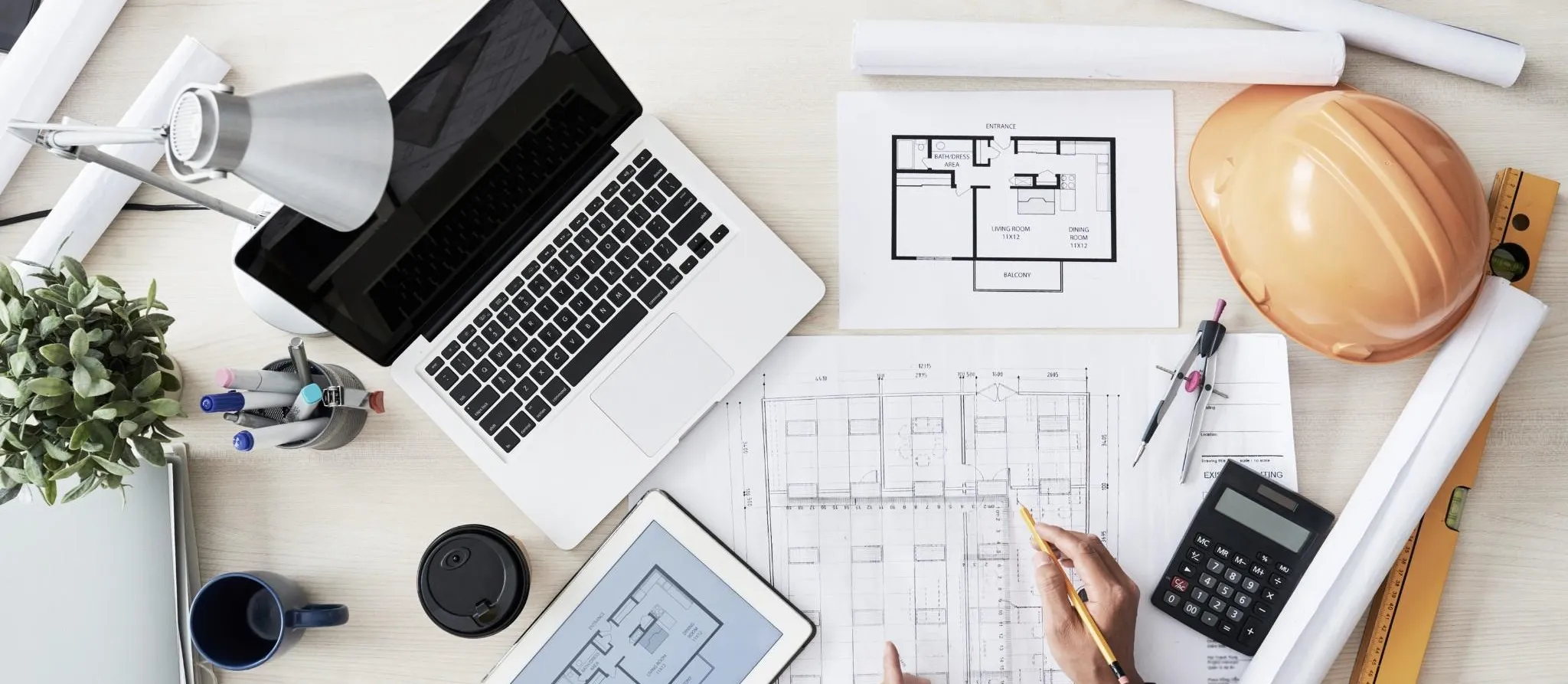
So I began working on our own preliminary layouts, using 2D and 3D planning tools to understand the available space and explore how different stations could work together.
Not architectural drawings. Not official installation plans. Just working models that allowed me to think visually and test ideas before asking anyone to spend money on equipment.
For me, this is an essential part of kitchen planning. A chef needs to imagine the working day before it happens. Where does a delivery enter? Where do ingredients go? How does food move from preparation to cooking, from cooking to plating, and finally to service? Where do dirty dishes return without crossing the clean preparation areas?
And because our concept includes both a kitchen and bar operations, we also needed to think carefully about drinks, chilled products, desserts and the movement of prepared items between service areas.
One badly positioned refrigerator might mean an extra three steps for every order. Three steps don’t sound like much until you multiply them by hundreds of movements during a busy day.
That’s when the little things become big things.
I wasn’t trying to create the prettiest kitchen on a computer screen. I was trying to understand how people would actually work inside it.
Of course, there is a limit to what preliminary drawings can tell you. Electricity, ventilation, drainage, installation requirements and professional equipment specifications need qualified technical specialists. A chef can describe what the kitchen needs to do. The technical team must establish how to build it safely and correctly.
And that was exactly why our next step would be so important.
For the first time, our menu, workflow ideas and preliminary drawings were ready to meet the people who could translate them into a real professional kitchen.
Making Room for Something New
While we were developing the menu and working on the kitchen layout, another question appeared. What should we do with the equipment already inside the restaurant?
Taking over an existing restaurant space doesn’t necessarily mean starting completely from zero. There can be equipment worth keeping, machines that no longer fit the new concept, and sometimes a few surprises left behind by the previous operation.
In our case, we had some professional gas equipment that probably wouldn’t have a place in the new kitchen. Rather than leaving it sitting around, I started contacting other restaurant owners to see whether they might be interested in buying it.
It’s not the most glamorous part of developing a restaurant. Nobody gets particularly excited about selling an old gas cooker. Well, perhaps another chef looking for a bargain does.
But there is a practical reason behind it. Every piece of unnecessary equipment occupies space, and recovering some value from existing assets can help reduce the investment needed for the new kitchen.
And then there was the pizza oven.
Now, this one was a little more personal. The oven was practically brand new, and the thought of getting rid of such a beautiful piece of equipment genuinely hurt my chef’s heart. After all, a pizza oven doesn’t have to spend its entire life making pizzas. Depending on its capabilities, it can be used for bread, focaccia, roasted vegetables and plenty of other preparations.
I simply couldn’t bring myself to let it go. So, for now, I’ve managed to save it from the list of equipment heading for sale. The challenge will be finding a way to fit it into our new kitchen without compromising the workflow.
Will we succeed? I certainly hope so. Sometimes a chef has to defend a good oven. Even against his own kitchen plans.
Of course, keeping old equipment just because it’s already there can be equally expensive in the long run. Sometimes the smartest investment is knowing what not to keep.
So, between menu development, workflow planning and discussions about the future restaurant, I found myself doing something I hadn’t originally expected: helping sell equipment before we had even ordered the new kitchen.
Just another perfectly normal day in restaurant management.
The Keys in My Pocket
Then came a moment that might sound small to anyone outside the restaurant business.
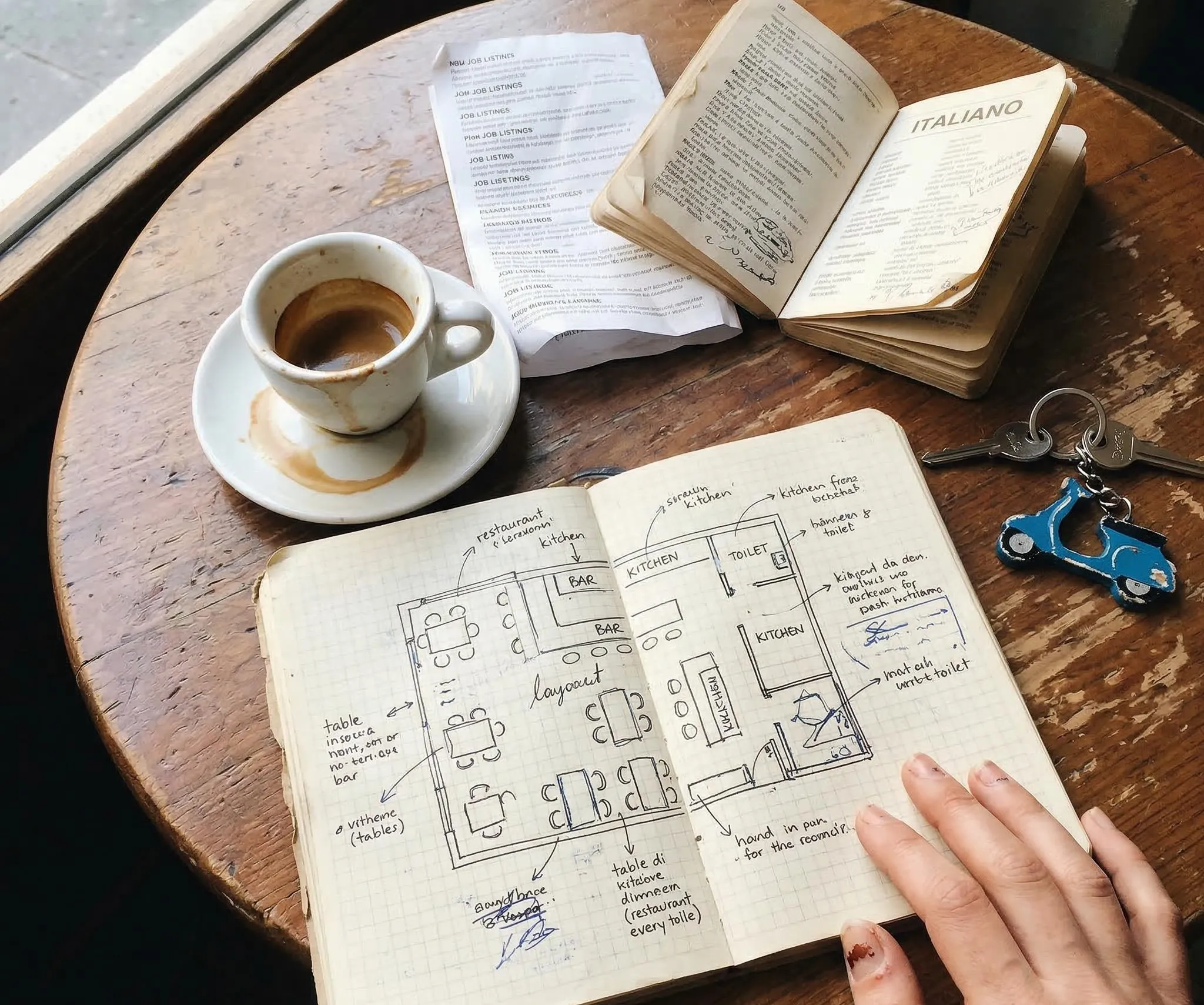
I finally had the keys.
After weeks of conversations, ideas, menu discussions, measurements and drawings, there was something wonderfully simple about holding the actual keys to the restaurant.
It changes the way you think about a project.
Until that moment, much of the work had existed in conversations, documents and computer screens. Now there was a real space where all those ideas would eventually have to work.
And a real space has a rather annoying habit of not being as flexible as your imagination.
Walls don’t move because your preparation table needs another fifty centimetres. Drainage doesn’t magically appear where you would prefer to install a sink. And electrical capacity doesn’t increase just because you’ve fallen in love with a particularly impressive piece of cooking equipment.
Suddenly, every decision felt a little more concrete.
For Mrs. A, the restaurant represented another step in developing her wider vision around health, wellbeing and lifestyle. For me, it represented a familiar challenge: taking an idea and building the practical systems that would allow people to deliver it every day.
We were looking at the same project from different perspectives, and that was perfectly natural.
An owner needs to think about the concept, investment and customer experience. A chef needs to think about the preparation, equipment, workflow, staff and service. The challenge is making those perspectives work together.
A beautiful restaurant with a badly organised kitchen will eventually show its problems. Perhaps not on the first day, or even during the first week, but certainly once the orders begin to arrive.
And I wanted to avoid solving problems later that we could still prevent now.
When the Professionals Arrive
Eventually, it was time for the first professional kitchen supplier to visit the restaurant.
We arranged a meeting with DIMCO Monaco to discuss the future kitchen, its equipment and the technical possibilities of the space.
I arrived with our menu, the workflow we had been developing, and a reasonably clear idea of how I wanted the kitchen to function.
Not every detail had been decided. That was precisely why we needed the meeting.
We spent approximately two hours discussing the kitchen and its future organisation.
For me, it was an important transition. Until then, we had been working mainly with our own ideas and preliminary layouts. Now we were discussing those ideas with professionals who work with commercial kitchen equipment and technical installations.
There is something reassuring about having a serious conversation with people who understand the difference between a kitchen that looks good in a drawing and one that must survive a real lunch service.
We discussed what the future kitchen would need, how the equipment could be organised, and what the next stages of planning would involve.
I was also interested in something beyond the equipment itself: financing.
Professional kitchens are expensive, and even a relatively modest restaurant can require a substantial investment before the first customer orders anything. Refrigeration, cooking appliances, preparation stations, extraction, installation and smaller equipment all add up remarkably quickly.
DIMCO confirmed that financing solutions were possible, including a potential leasing arrangement over 48 months, subject to the actual proposal and approval conditions.
That was encouraging news. It didn’t mean we suddenly had a kitchen or an approved financing agreement, but it gave us another possibility to consider.
I also appreciated the professional feedback during the meeting. The team recognised the experience and practical thinking behind our preparations, which was particularly encouraging after spending so much time working through the details.
After all, the purpose of our preliminary plans had never been to replace the technical specialists. They were there to help us ask better questions and explain what the kitchen actually needed to do.
And now we had reached the point where those ideas could begin moving towards a real technical proposal.
Two Months Later…
Looking back at these first two months, I find it interesting how little of the work has actually involved cooking.
We have discussed food, developed a menu, studied workflows, worked on layouts, considered equipment, explored operational needs, spoken with suppliers and started preparing the existing restaurant space for its next chapter.
But we haven’t served a single customer yet.
Not one.
And still, some of the most important decisions about the future restaurant are already being made.
That’s perhaps what makes this stage so fascinating. A restaurant begins taking shape long before anyone smells fresh bread coming from the oven or hears the first order called into the kitchen.
The real work starts quietly, behind the scenes, through conversations, calculations, drawings, questions and a surprising number of small decisions.
By the end of our first meeting, DIMCO was preparing the technical plans and quotation for the new kitchen.
We now had twelve menu items, an operational vision, a working concept, the keys to the restaurant and a professional supplier developing the next stage.
What we didn’t have yet was the final kitchen design, an approved equipment budget or a confirmed installation schedule.
Would the proposed equipment fit our workflow? Would the technical plans reflect what we actually needed? Would the financing make sense? And how many of our original ideas would survive the reality of the quotation?
Those answers were still waiting for us.
For now, the kitchen existed somewhere between a collection of drawings and a real construction project.
But it was getting closer.
And that was enough for the first chapter.
To be continued…