



OC Kitchen Lab · Ingredient Encyclopedia
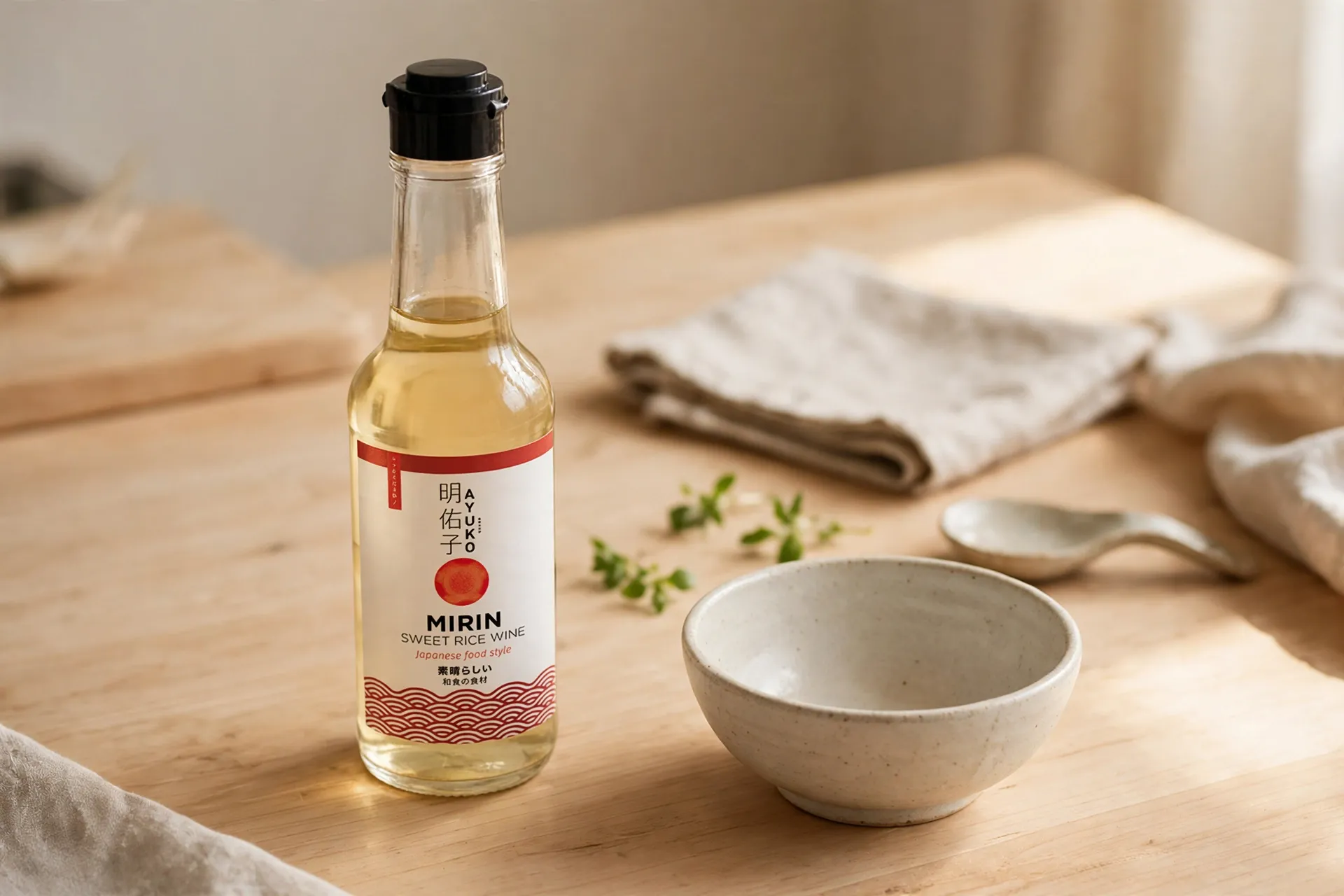
Mirin
Sweet, mild, and silky
Pantry
Origin
From Japan, made from glutinous rice.
Season
Available year-round.
Culinary uses
Stir mirin into teriyaki sauce, dressings, and simmered dishes. Add it to soups and rice bowls for gentle sweetness and shine.
Fun fact
Mirin adds shine to a glaze because of its natural sugars.
Mirin is sweet and mild, with a silky, slightly syrupy texture. It is a Japanese cooking wine that adds sweetness and shine to sauces. It softens salty flavors and gives glazes a beautiful gloss.
Where it grows
Native originGrowing / production
Native: China, Japan, South Korea. Growing: China, Japan, South Korea.
Variations
- Hon Mirin – real, sweet, for sauces
- Shio Mirin – salty, for everyday cooking
- Mirin-style – milder, for quick dishes
- Sake – drier, less sweet, for cooking
Nutrition
Mirin
Basis: 100 g
198 kcalCalories
0.6 gProtein
0.1 gFat
37.2 gCarbs
From our kitchen

In our cookbook
3 recipes · 4 % of the cookbook
Mostly inSignatures 1Pasta 1Breakfast 1
Often cooked withSoy SauceVegetable OilSaltBlack PepperSugarOnion
 Chicken Yaki Udon (Japanese Stir-Fried Noodles)
 Salmon Teriyaki (Japanese Glazed Salmon with Sesame Rice)