



Classic red, Alsatian vin chaud, white, German Glühwein and an alcohol-free version. Five directions, one pot, and a few rules that keep it from turning into hot, sad, cinnamon-flavoured sugar water.
The smell of the season is simmering. Time to get the pot out.
It is early November. The first Christmas markets are about to open, shop windows are already glowing, and somewhere in a kitchen a chef is looking at a bottle of red wine and thinking, “Technically, this is research.” Mulled wine is one of the simplest drinks in the world, which is exactly why it is so often done badly. Cheap wine boiled for an hour, ground spices that turn the whole thing gritty, sugar poured in like it owes somebody money. Let’s fix that before December.
We looked at recipes from several traditions: English-style classic, French vin chaud (including the Alsatian and Strasbourg versions), a white wine variant, German Glühwein and a non-alcoholic pot. They disagree on plenty, but they agree on a few basics. Here they are, and then the five directions.
A word from Prague
I come from Prague, so for me mulled wine is not a recipe, it is a memory. In Czech it is svařák (or svařené víno), and in winter the Old Town Square and Wenceslas Square fill with market stalls, steam rising from big pots, and people holding warm mugs with gloved hands. You stand in the cold, you wait in the queue, you get your cup, and for a few minutes the day feels easier.
Every year I think I have seen it all. Every year I go back anyway. A Christmas market with mulled wine is simply a classic that never gets old, and somewhere in my head the smell of cinnamon, cloves and orange will always be the smell of December in Prague.
So when I say you can make a good pot at home, I mean it, but I also know it will never taste exactly like standing in a square with snow on your shoulders. That part is up to you.
Five rules before you light the stove
- Use a wine you would drink cold. Heat does not hide faults. Aim for something fruity, dry-ish and not too tannic: Merlot, a soft Grenache or a simple red blend work well. No need for a grand cru, but skip the bottom shelf.
- Whole spices only. Ground spices make the drink cloudy and gritty. Cinnamon sticks, cloves, star anise and a little fresh ginger or cardamom do the job and can be strained out.
- Gentle heat. Warm it, don’t boil it. Boiling drives off the aroma you are trying to build, and makes the spices harsh and bitter.
- Start with less sugar. You can always add more honey or sugar at the end. You cannot take it out. Taste, then decide.
- Strain before serving, and take the spices out if you will reheat. Left in the pot, the cloves and citrus peel get stronger and bitter over time.

1. The classic red
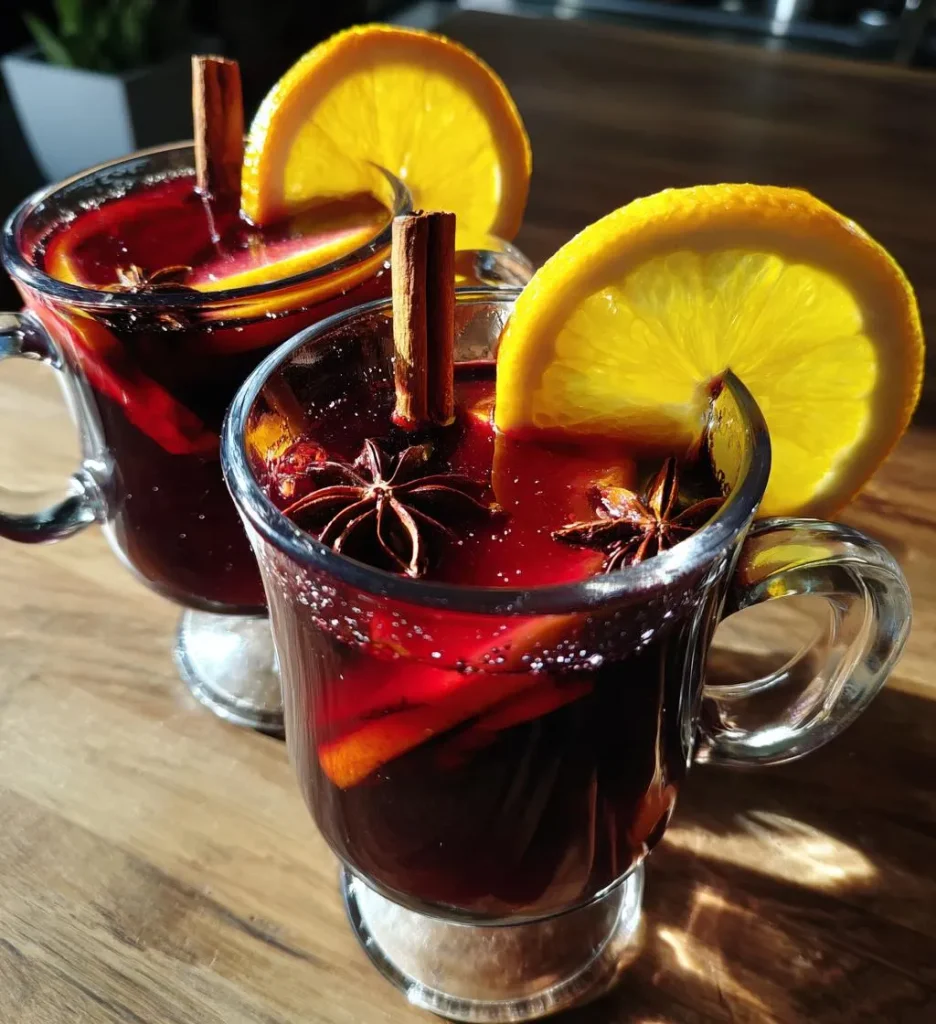
The reference point. One bottle of red wine, two or three strips of orange peel (peel, not the white pith), a cinnamon stick, a few cloves, a star anise and a spoon or two of brown sugar or honey. Warm very slowly for about 15 to 20 minutes, never letting it boil. Strain, taste, adjust.
A splash of brandy at the end gives it a rounder, warmer finish. Optional, but the people at the table will not complain.
2. Vin chaud, the French way
The French versions are lighter on the fuss. The Alsatian style we found is built around red wine with cinnamon, cloves, a pinch of nutmeg and fresh ginger, simply warmed for a few minutes with sugar and an orange. The idea is a clean, aromatic drink you can make in 15 minutes and serve with Alsatian biscuits.
If you prefer the mountain style, the Savoie versions keep the same logic, with a little more sweetness and citrus, and often a shot of something stronger for après-ski.
3. White mulled wine
The elegant cousin. Use a dry or off-dry white (Riesling, Pinot Grigio, Sauvignon Blanc, or Gewürztraminer if you want something more perfumed), avoid anything heavily oaked or buttery, and swap the heavy spices for lighter ones: cardamom pods, a cinnamon stick, lemon instead of orange, honey instead of brown sugar, and perhaps a sprig of rosemary.
It is fresher and lighter, and a good option for people who find red mulled wine too heavy. Strasbourg is known for its white version, and some versions add raisins and almonds, as in a traditional vin chaud blanc.
4. Glühwein, the market classic
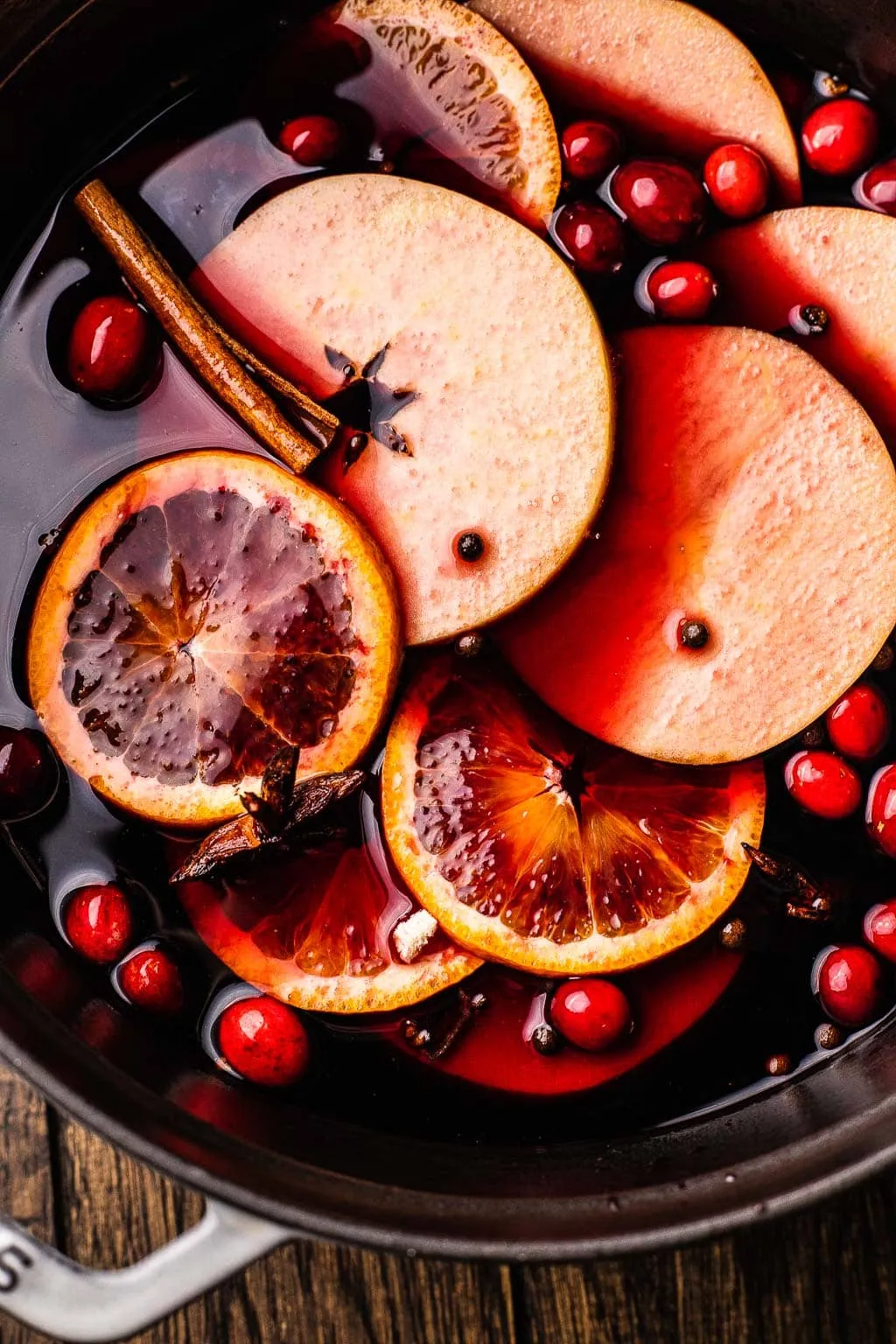
“Glow wine”, named for the hot irons once used to heat the drink. The German market style is typically red wine with orange, lemon, cinnamon, cloves and star anise, sweetened to taste, and served in a small mug rather than a big glass. Recipes vary from family to family and region to region, and every German grandmother will tell you yours is wrong.
Some versions add a shot of rum or amaretto at the end. If you serve it at home, it holds well for a few hours at a low temperature, which makes it ideal for parties.
5. The alcohol-free pot
Not an afterthought: a good non-alcoholic version means everyone at the table can join in, including drivers and children.
There are two routes. The first is dark red grape juice, simmered with orange, star anise and cinnamon. The second blends juices (grape, cranberry, apple or pomegranate) with spices, and some people add a strong black tea for tannin and body. In Germany, the children’s version is called Kinderpunsch.
Because grape juice is already sweet, add little or no sugar, and taste before you decide. A squeeze of lemon at the end brings it back into balance.
The restaurant angle: a pot is a product
If you run a restaurant, bar or café, mulled wine is also one of the easiest seasonal products you can offer, and one of the easiest to cost properly.
- Cost it per portion. Add wine, citrus, spices, sweetener, any spirit and the serving cup. A standard bottle makes roughly five to six servings, so the arithmetic is very simple.
- Batch it. Make a large pot, keep it at a gentle temperature, and serve by the ladle. It saves staff time during a busy evening.
- Check the holding time. Strain the spices out, keep it warm without boiling, and don’t leave it overnight to be served again the next day.
- Always offer the alcohol-free version, clearly labelled and kept in a separate pot with separate ladles.
- Mind the allergens and the label. Spirits, nuts (in some white versions) and honey should be on your information sheet, as with any other menu item.
Chef’s verdict
A good mulled wine is not about a secret recipe. It is about decent wine, whole spices, patience and a low flame. The rest is personal taste, and that is where the fun starts.
Make a pot this weekend, taste it, adjust it, and write down what you changed. By December you will have your own recipe, and the right to argue about it with everyone you know. And if you ever find yourself at a Christmas market in Prague, order a cup, and think of us.
Stay curious. Keep the heat low. And never, ever, boil the wine.
Jan · Online-Chef
Online-Chef · Board of Interests · Sources consulted for traditions and techniques: Cookie and Kate, Waitrose, Vinatis (vin chaud and vin chaud blanc), Woman & Home, Julie Blanner, The Takeout, Delicious Magazine, Saveur, Germangirlinamerica.com, La Libre, Slate.fr. Quantities in this article are our own guidance, not a reproduction of any single recipe.