


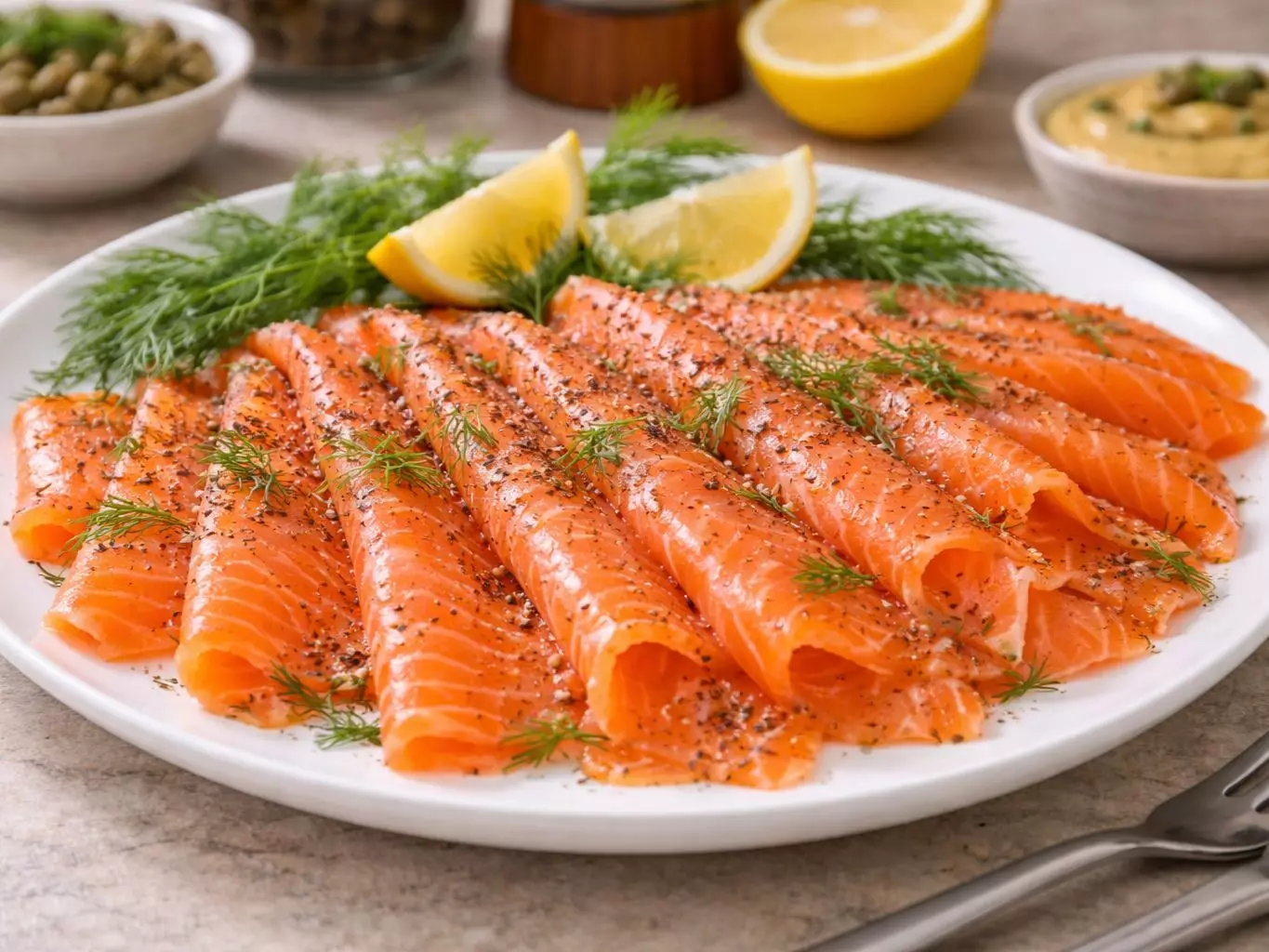

A Chef’s Guide to Curing, Slicing & Serving
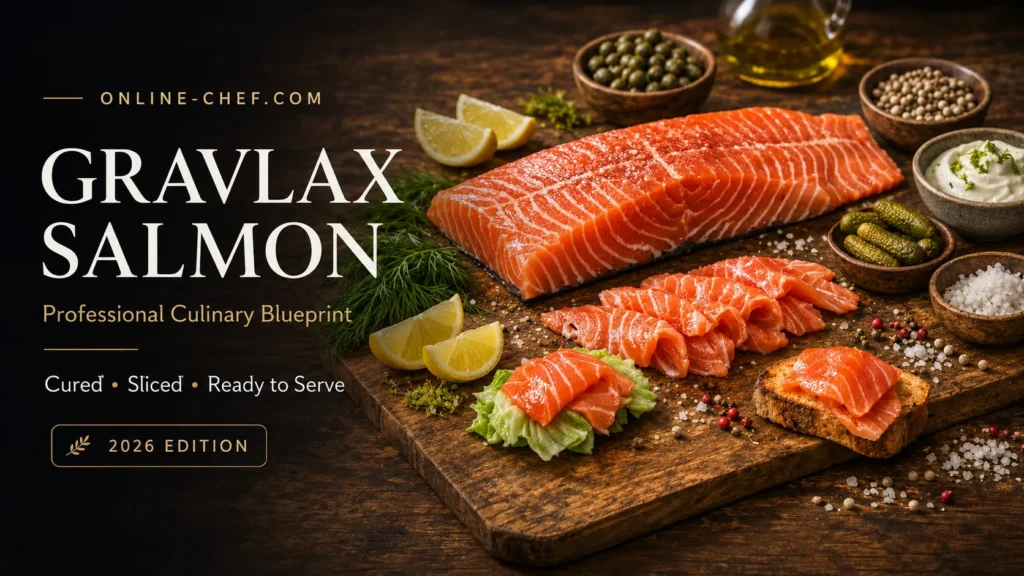
The first thing I decide when I make gravlax is how I want people to eat it. For a late Sunday breakfast, I want a slice thin enough to fold over warm toast, with a little dill and lemon. For a table of friends, I like to leave the salmon on its skin, cut it into leaves and put a bowl of dip within everyone’s reach. Both plates begin with a salmon fillet, salt and sugar. By the time I pick up my knife, they’re two very different dishes.
That’s how I put together the Ultimate Gravlax Summer 2026 collection. There are five versions, each built around something worth bringing to the table. French Classic is the one I’d make first. Once you’ve tasted what dill, citrus and a little coriander can do for salmon, you have a good starting point for playing with jalapeño, summer berries or a handful of fresh green herbs.
Choosing Salmon for Gravlax
At the fish counter, tell your fishmonger you’re making gravlax and will be serving the salmon uncooked. Ask for a skin-on centre cut with fairly even thickness from one end to the other. A thin tail and a thick shoulder on the same piece make it harder to get the texture you want across the whole fillet.
Atlantic salmon is my everyday choice for this collection. Its richness suits a salt-and-sugar cure, and a centre cut gives you generous slices that fold easily onto bread. King, also called Chinook, is a richer option for a plate where the salmon will be served almost on its own. Sockeye has a deeper red colour, a firmer bite and a more pronounced flavour. Coho sits somewhere in the middle, with enough character for a simple herb cure.
A note for home cooks. Gravlax is served uncooked. For fish intended to be eaten raw, France’s food safety agency ANSES recommends seven days of freezing in a domestic freezer before consumption. Plan for that step when buying fresh salmon, thaw it in the refrigerator and keep it at 0–4°C throughout curing. anses.fr
The Base Cure · French Classic Gravlax
Fresh dill is the first thing you smell when you slice this version. Lemon and orange zest bring freshness without soaking the fish in juice, while lightly crushed coriander adds a warm citrus note of its own. For a first batch, I’d serve the end slice plain. It’s the easiest way to taste the balance before you reach for the bread or the dip.
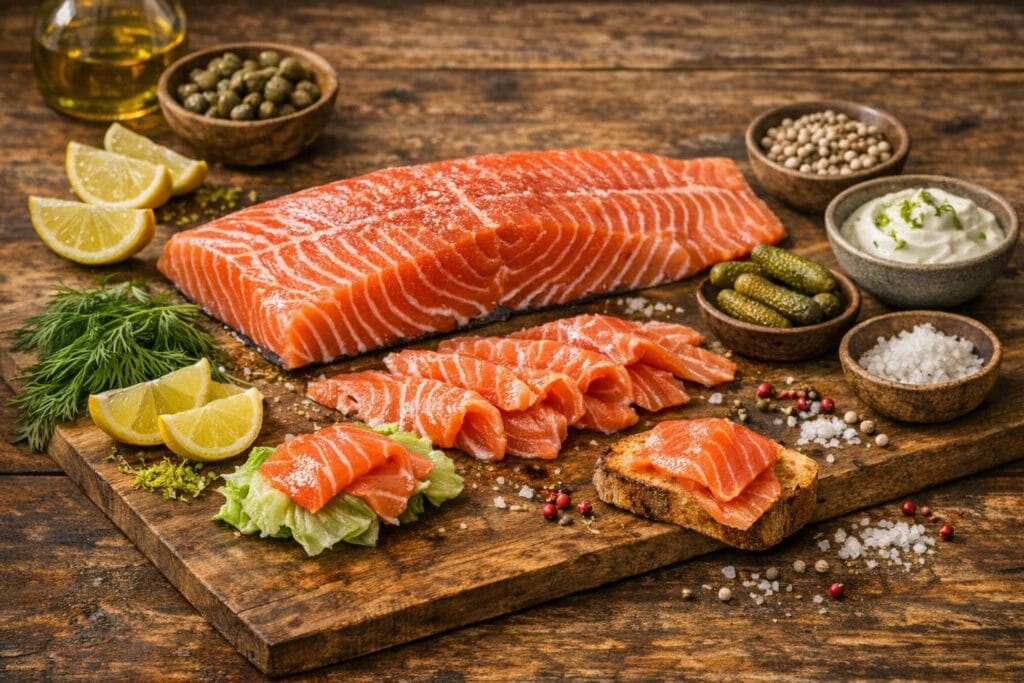
French Classic Gravlax (Cured Salmon)
Easy
For Sunday brunch, fold a thin slice of the classic gravlax over warm toast. For a table of friends, try Jalapeño Skin-Leaf with a cool yoghurt dip, or slice Blueberry-Lime Night at the table so everyone can see the violet edge around its coral centre.
View recipeChoose Your Gravlax Style
French Classic · Dill, Citrus & Coriander
For brunch, toast the bread just before you slice the salmon. Give the toast a moment to let the steam escape, then add a thin layer of crème fraîche and a loose fold of gravlax. A fold gives you a soft, generous bite and leaves space for a few dill fronds. This is the version I’d choose for a second helping with coffee still on the table.
Jalapeño Skin-Leaf · Tear, Dip & Share
Fresh jalapeño, lime zest, parsley, mild paprika and crushed red peppercorns give this version its green heat. The cut is what makes it such a good sharing dish. After curing and drying, set the fillet skin-side down and cut deep, leaf-shaped sections through the flesh. Stop just short of the skin on every cut. The intact skin holds the piece together as you gently open the leaves across the platter.
Bring it to the table with lime wedges and a bowl of cool yoghurt dip. Guests can lift a leaf and pull away a piece. If you make one version for a summer drinks table, this would be my pick.
Blueberry-Lime Night · A Dark Berry Edge
Crushed blueberries stain the outside of the salmon a deep violet. The best moment comes with the first cut, when that dark edge appears against the coral centre. Lime, blood orange zest and pink peppercorns keep the flavour bright. Crush the berries just enough to release their colour and leave some texture in the cure.
For an evening starter, lay three slices slightly overlapping so the berry edge is visible on each one. A little lime at the table is all I’d add. After the work the blueberries have done, it would be a shame to cover them with sauce.
Phoenix · Red Berries, Citrus & Pink Pepper
Phoenix takes the berry idea in a sunnier direction. Raspberry brings tartness, strawberry gives a softer perfume, and a little beetroot deepens the red. Orange rounds out the cure while pink peppercorns echo the fruit. Slice Phoenix and Blueberry-Lime Night side by side and you can see the difference between the two before you taste them.
I like Phoenix with a small spoonful of raspberry crème fraîche beside the salmon. Keep most of the slices plain so everyone can taste the cure first, then try a bite with the cream.
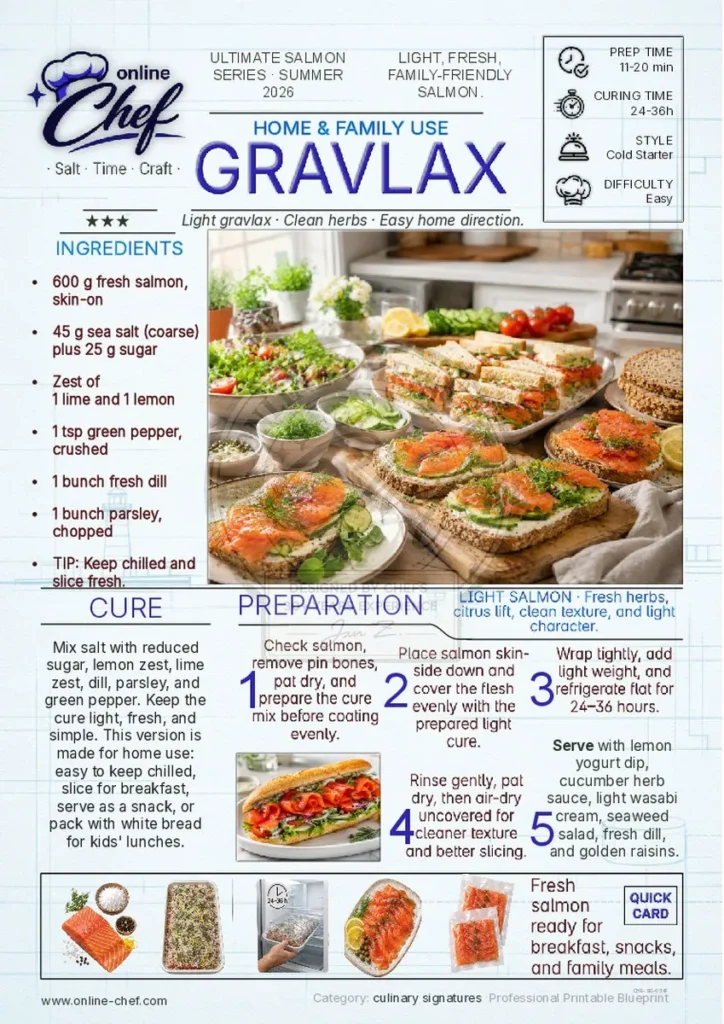
Home & Family · The Green Herb Cure
This is the version I’d keep for a quiet weekend lunch. Dill and parsley do most of the work, with lemon, lime and crushed green pepper for freshness. The cure uses 25 g of sugar for a 600 g fillet, compared with 35 g in French Classic. The shorter ingredient list gives the herbs room to come through.
My favourite way to serve it is also the easiest. Put good bread, thinly sliced cucumber and lemon yoghurt on the table, then slice the gravlax as you need it. Everyone can build their own open sandwich, and the cucumber gives each bite a little crunch.
The Final Cut · Match the Slice to the Service
For a plated starter, aim for a broad slice with a fine edge. Set the knife almost parallel to the board and use as much of the blade as you comfortably can in one smooth stroke. A short sawing motion leaves ridges in the flesh. Wipe the blade between cuts, especially with the berry cures, so the violet or red stays along the edge and the centre shows its natural colour.
For the Jalapeño Skin-Leaf, change the angle and leave the skin intact. The classic slice is meant to come away cleanly and fold. The leaf stays attached until someone at the table pulls off a piece. That small decision changes the whole service, right down to where you put the dip.
And keep the trimmings. Those little end pieces may be too narrow for your best-looking starter, but chopped onto a warm breakfast toast with crème fraîche and chives, they might be the cook’s favourite bite.
Inside the Ultimate
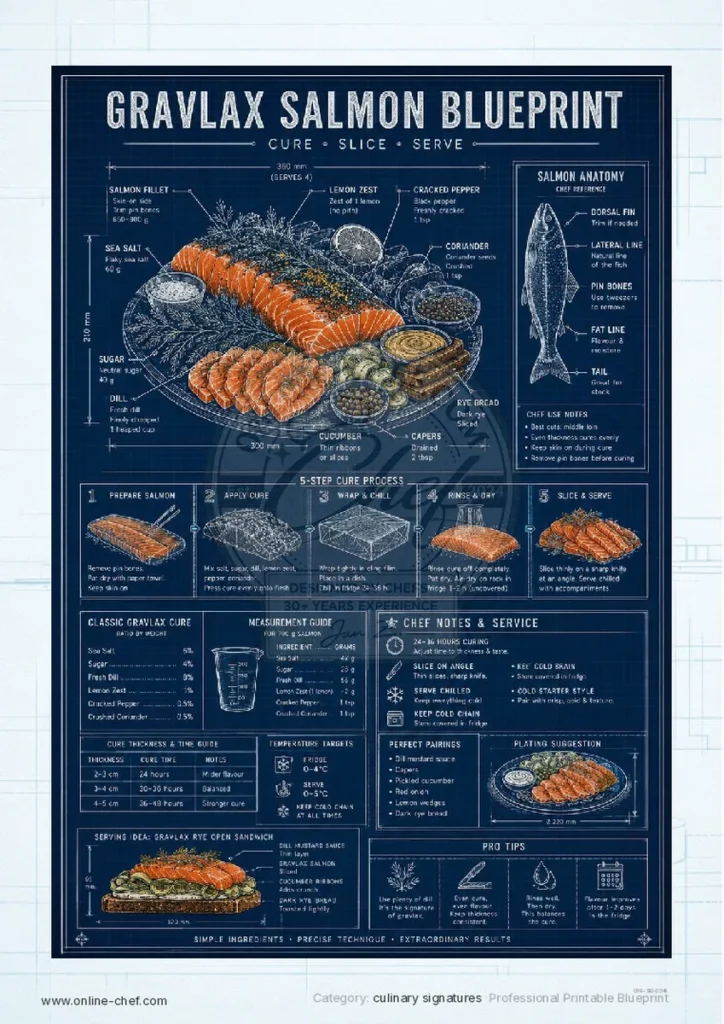
Gravlax Blueprint
If you’re making gravlax for the first time, start with the free printable French Classic recipe above. Cure one fillet, slice it by hand and taste the first piece on its own. Then try a second on warm toast with a little crème fraîche. That gives you a feel for how thinly you like your salmon and how much citrus you want on the plate.
The Ultimate Gravlax Summer 2026 · Creator Edition brings all five recipes together in a 23-page printable kitchen guide. Each card includes ingredient quantities, curing instructions, finishing notes and serving ideas. You’ll also find a guide to choosing salmon and two ways to cut it, from delicate slices for brunch to the jalapeño skin-leaf cut for a sharing platter.
Print the card you’re cooking from and keep it beside your board. For an evening with friends, I’d choose Blueberry-Lime Night and bring the fillet to the table whole. That first slice, with its fine violet edge around the coral centre, is worth letting everyone see.
