

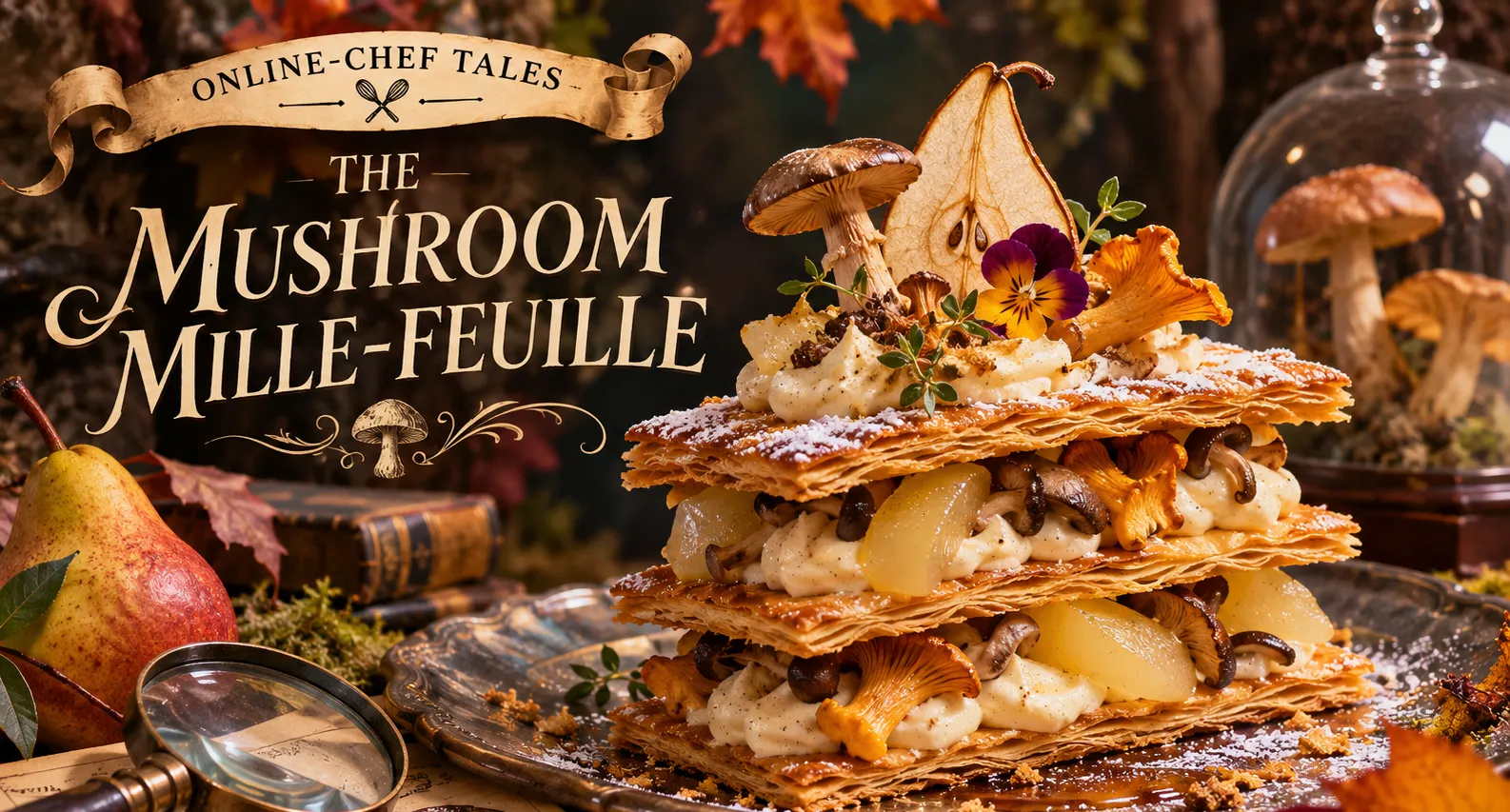

The Mushroom Mille-Feuille When the Forest Invaded French Pastry
Pears, caramelised morels, pickled chanterelles and a French pastry classic. Somebody clearly decided that vanilla custard was getting far too comfortable.
There are certain rules in a professional kitchen that nobody particularly enjoys questioning. Keep raw and cooked products separate. Never underestimate a sharp knife. And when somebody orders a mille-feuille, the chances are they expect crisp puff pastry, cream and something reassuringly sweet.
Then a pastry chef arrives with a basket of mushrooms and decides to rewrite the dessert menu.
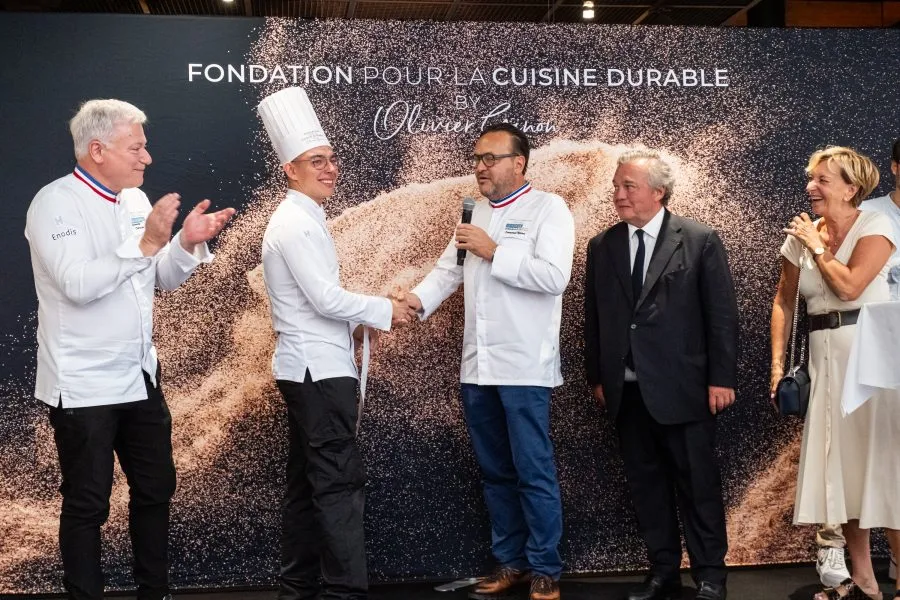
In September 2026, Axel Pachot, pastry chef at Château du Mont Joly in Sampans, France, won the third edition of the La Pâtisserie Durable competition with a mille-feuille featuring pears, mushrooms and gaudes, a traditional roasted maize flour from the region. His creation, named La Clairière jurassienne, drew inspiration from the forests and autumn ingredients of the Jura.
Now, mushrooms in a dessert are not entirely unheard of in experimental gastronomy. But putting them into one of France’s most recognisable pastries, then convincing a professional jury that the result deserves first prize? That requires more than a clever gimmick.
It requires understanding what makes a dessert work in the first place.
The Challenge: Reinvent a Classic Without Losing It
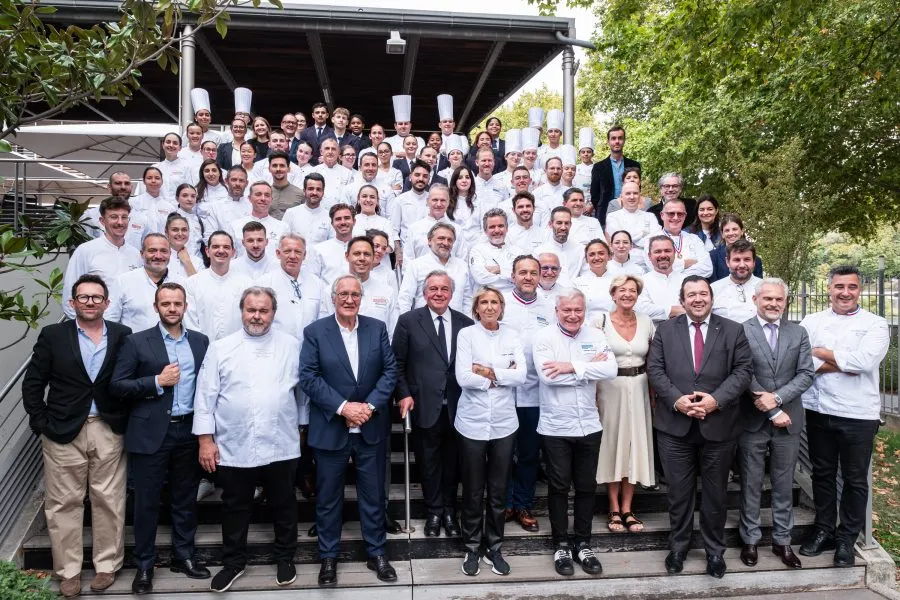
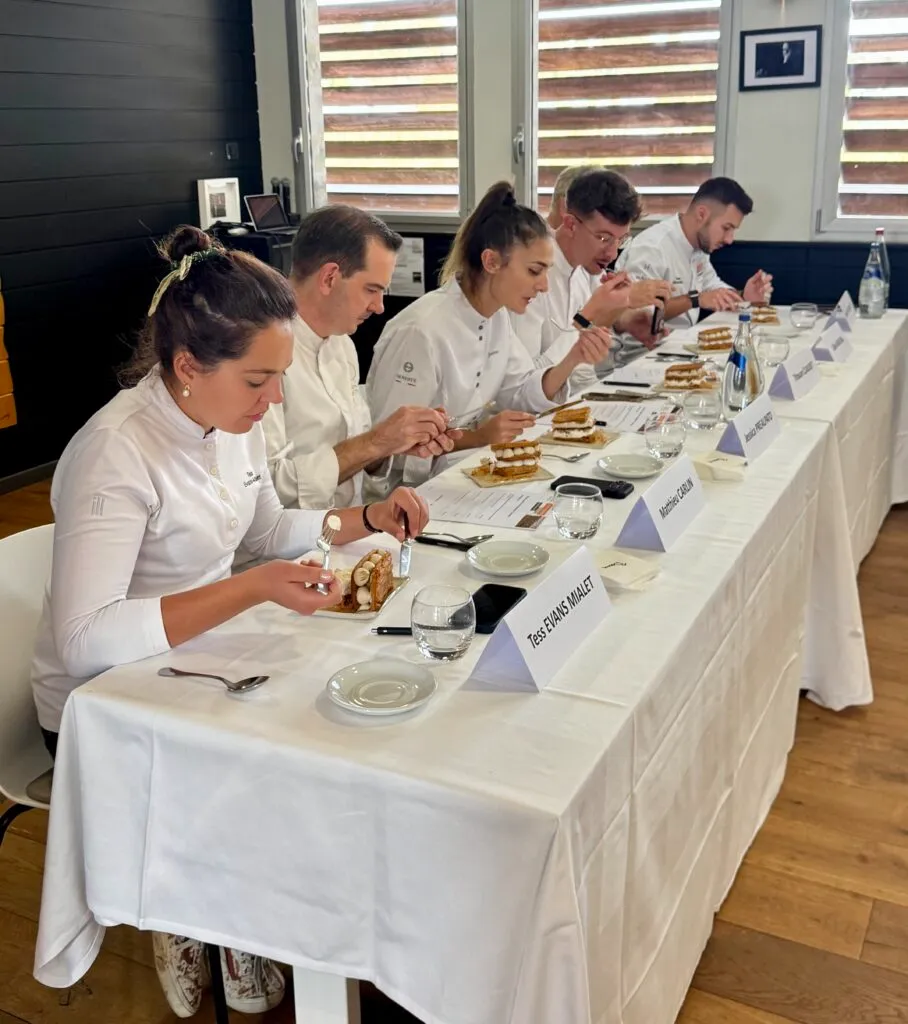
The competition took place on 28 September 2026 at Brasserie L’Ouest Bocuse in Lyon. Organised by the Fondation pour la Cuisine Durable by Olivier Ginon, the event challenged pastry chefs to create a seasonal mille-feuille incorporating mushrooms while demonstrating an approach to responsible gastronomy.
The technical brief was demanding. Candidates could prepare their laminated pastry dough in advance, but the pastry had to be rolled out and baked during the competition. That meant the chefs still had to manage one of the most important elements of a mille-feuille under pressure: proper lamination and precise baking.
Anyone who has worked with puff pastry knows that it doesn’t respond particularly well to negotiation. Too much moisture and the crispness disappears. Inadequate baking leaves the layers heavy. Excessively thick pastry can overwhelm the filling, while a beautifully delicate construction can collapse the moment somebody approaches with a fork.
Add mushrooms to the equation and another complication appears. These ingredients carry their own moisture, textures and aromatic intensity. Working them into a dessert without compromising the pastry becomes a serious exercise in balance.
This wasn’t a competition about putting unusual ingredients together for a photograph. It was about delivering a technically convincing pastry that also told a story about seasonality and resource management.
And Pachot had a particularly interesting story to tell.
A Dessert Built Around the Jura
His winning creation brought together autumn pears, morels, chanterelles, meadow mushrooms, traditional gaudes flour and regional ingredients such as honey, dairy products and sweet woodruff. The concept connected the dessert to the Forest of Chaux and the agricultural traditions of the Jura.
One especially intriguing detail was the treatment of the mushrooms. The morels were worked into a caramel preparation, while the chanterelles appeared in pickled form. These are not random additions. They represent two different ways of controlling flavour and creating contrast.
Caramel offers sweetness, bitterness and toasted depth. Morels bring a characteristic earthy, nutty aroma. Combining them can create a bridge between the familiar language of pastry and the more savoury character of woodland mushrooms.
Pickling works differently. Acidity introduces freshness and cuts through richness, an important consideration when dealing with buttery puff pastry and creamy fillings. Chanterelles also bring their own delicate aromatic qualities, making them an interesting partner for fruit.
The pears provide the central thread. Their gentle sweetness and soft texture can support complex aromas without dominating them. Roasted maize flour contributes another layer of toasted flavour, helping connect the pastry with the earthy character of the mushrooms.
Of course, reading an ingredient list is not the same as tasting the finished dessert. Only the jury and those who sampled the actual creation can judge how successfully every element came together. But from a culinary perspective, the structure of the idea is fascinating.
There is a clear relationship between sweetness, acidity, fat, texture and aroma. That is where the real cooking begins.
Why Mushrooms Can Work in Sweet Preparations
A mushroom is not automatically a savoury ingredient simply because we usually serve it alongside meat, risotto or cream sauce. Its suitability depends on the variety, preparation method, concentration and the other ingredients around it.
In pastry, chefs are increasingly interested in flavours that introduce roasted, fermented, herbal or earthy notes. Coffee, dark chocolate, black sesame, miso and olive oil have all helped demonstrate how a dessert can move beyond straightforward sweetness.
Mushrooms offer another direction, although they demand careful handling. Their umami character can add depth, but too much can make a sweet preparation feel more like a sauce from the main course. The aim is not to make the customer wonder whether the waiter has delivered the wrong plate.
Take a caramelised mushroom element, for example. The chef must consider the intensity of the mushroom flavour, the concentration of the caramel and how both will behave against cream, fruit and pastry. A lightly acidic component may help sharpen the result, while crisp textures prevent the dessert from feeling heavy.
There is also the question of aroma. Mushrooms can change dramatically depending on whether they are dried, fresh, roasted, infused or preserved. A technique that works beautifully in a savoury dish may need substantial adjustment when sweetness enters the equation.
And this is why unusual desserts deserve proper culinary analysis. Being different is easy. Being deliciously different is much harder.
Sustainability Begins at the Preparation Table
The competition wasn’t simply celebrating eccentric pastry ideas. Its central theme was sustainability, including seasonal sourcing, reducing waste and making thoughtful use of ingredients.
Pachot’s entry reportedly pursued a zero-organic-waste objective. Among the details described in the competition reporting was the transformation of pear peelings into vinegar. Rather than treating the skin as a disposable by-product, the chef incorporated it into a broader approach to using the fruit.
It’s a familiar principle in professional cooking, but one that still deserves attention. A restaurant’s waste bin often reveals a surprising amount about its production methods. Vegetable trimmings, fruit skins, pastry offcuts and unused preparations may represent opportunities, provided they can be recovered safely and economically.
However, waste reduction is not a competition to see how many questionable leftovers can be put back onto the menu. Every additional preparation requires labour, storage, equipment, traceability and proper food safety controls.
For example, transforming fruit peelings into vinegar is a controlled production process, not an invitation to leave scraps fermenting in a forgotten container behind the walk-in refrigerator.
The practical question for a working kitchen is whether an ingredient can be used in a way that improves the finished product while making operational sense. Creative reuse should deliver quality, not simply produce a more complicated mise en place.
The same principle applies to regional sourcing. Using locally characteristic products can create a stronger culinary identity, but their value ultimately depends on quality, availability and suitability for the dish.
Sustainability works best when it becomes part of good kitchen management rather than a decorative statement on the menu.
When Creativity Meets Professional Discipline
One of the revealing aspects of the competition was how the candidates dealt with practical constraints. A detailed account of the event described Pachot explaining compromises around oven temperatures because multiple competitors had to share equipment. It also described his decision to gather sweet woodruff locally rather than rely on imported vanilla.
Those details might sound minor compared with the spectacular idea of mushroom pastry, but they matter. Competition kitchens, like restaurant kitchens, rarely offer unlimited space, time or equipment. Creativity has to survive the realities of production.
A professional chef can develop the most extraordinary concept imaginable, but the dish still has to be prepared, assembled, served and eaten. The ingredients need to arrive on time. The pastry needs to remain crisp. The kitchen needs to understand the procedure. And somebody eventually needs to calculate the cost.
In a restaurant, the next challenge would be consistency. Could this mille-feuille be produced repeatedly during a busy service? How would the mushroom preparations be stored? Which elements could be made ahead? How would the pastry behave after assembly?
These are the questions that separate a spectacular competition piece from a practical restaurant dessert.
They don’t diminish the achievement. They show why culinary innovation demands both imagination and technical discipline.
Chef’s Verdict: An Unusual Ingredient Is Not a Concept
What makes Axel Pachot’s victory interesting is not simply that a pastry chef put mushrooms into a mille-feuille. The competition required mushrooms, after all. The achievement lies in how he developed the imposed ingredient into a coherent dessert connected to a particular landscape, supported by appropriate pastry techniques and considered approaches to waste.
For chefs, there is a useful lesson here. When developing a new dish, start by understanding the ingredients and the experience you want to create. Think about flavour structure, texture, temperature, appearance and practical execution. A surprising ingredient should earn its place on the plate.
If the customer remembers only that the dessert contained mushrooms, perhaps the idea was more successful than the cooking. If they remember an exceptional mille-feuille and discover that mushrooms helped make it memorable, that’s a different achievement altogether.
Would I put a mushroom mille-feuille straight onto a restaurant menu tomorrow? Not without tasting it, testing the preparations and calculating the food cost. But would I want to explore the idea? Absolutely.
French pastry has survived centuries of reinvention. It can probably survive a few morels.
And if somebody in the pastry section asks for a basket of chanterelles tomorrow morning, don’t call the head chef immediately. They might be working on dessert.
Stay curious. Respect the classics. And never confuse culinary creativity with simply putting strange things on a plate.
online-Chef Tales · Stories from the deliciously unpredictable world of food.