

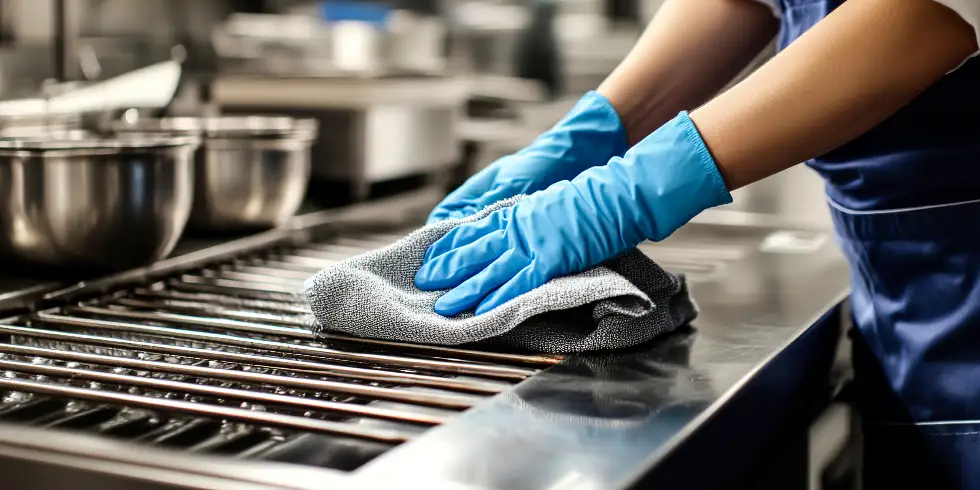
Small reset, big savings.
Before the season starts, every restaurant has the same choice:
Wait until problems appear during service,or clean, check, repair and organize everything before the pressure begins.
A proper pre-season cleaning is not just about making the kitchen look nice. It is one of the simplest ways to save money, protect the team, reduce stress and avoid expensive surprises in the middle of service.
When the restaurant gets busy, small problems become expensive very fast.
A dirty fridge seal becomes temperature loss.A greasy hood becomes a safety risk.A blocked drain becomes a bad smell during service.A forgotten corner becomes a pest problem.A messy dry store becomes waste, double ordering and expired products.
And all of this costs money.
Why pre-season cleaning is worth it
A good pre-season clean helps the kitchen start from zero again.
Not perfect. Not luxury. Just clean, visible, organized and under control.
Before the season, you usually still have a little time. During the season, you don’t. That is why this moment is so important.
You can check fridges and freezers properly.You can move equipment and clean behind it.You can organize dry storage.You can throw away expired products.You can check labels, containers, shelves, drains, bins, filters and small equipment.
This is the type of work nobody sees when everything is going well.
But everybody feels it when it is not done.
What it helps prevent
Pre-season cleaning can help reduce:
Food wasteBad smellsPest problemsEquipment stressTemperature issuesTeam confusionLast-minute repairsPoor hygiene habitsFailed internal checksSlow opening routines
In real kitchen life, hygiene is not only a regulation. It is money control.
A clean kitchen works faster.A clean storage area prevents over-ordering.A clean fridge protects products.A clean prep area protects guests.A clear checklist protects the chef from having to remember everything alone.
Chef recommendation
Do not make the pre-season clean only “one big cleaning day”.
Make it a small system.
One day for cold storage.One day for dry storage.One day for equipment.One day for floors, drains and hidden areas.One day for labels, logs and documents.
It is easier for the team, and the result is usually better.
The goal is not to create stress.The goal is to restart the kitchen before the season starts.
What to check first
Start with the places that create the most expensive problems:
Fridges and freezersHood, filters and cooking equipmentFloor drains and waste areasDry storage and old stockPrep tables and cutting boardsSmall equipment and removable partsLabels, FIFO and date controlOpening and closing routinesTemperature logsCleaning responsibility
If the team knows what must be cleaned, how often, and who is responsible, the kitchen becomes easier to manage.
A clean kitchen is not memory. It is routine.
Many restaurants rely too much on memory.
“Someone cleaned it.”“We normally check that.”“I think the fridge was okay.”“We will do it later.”
That is how problems start.
A simple checklist gives the team a visible routine. It does not replace professional HACCP obligations or local food safety rules, but it helps the daily kitchen stay organized, cleaner and easier to control.
And in a busy season, that matters.
Start the season before the guests arrive
Pre-season cleaning is not glamorous.
But it is one of the smartest things a restaurant can do before service gets intense.
Clean now.Check now.Repair now.Organize now.
Because once the season starts, every forgotten task becomes harder, slower and more expensive.
For practical kitchen hygiene tools, checklists and HACCP support documents, visit:
Online-Chef helps kitchens build simple, printable systems for daily control, cleaning routines, hygiene discipline and real service organization.