
The Seven Core Principles of HACCP
HACCP is a preventive food safety system. Instead of waiting for problems to appear at the end, it helps kitchens identify hazards, control important steps, monitor results, correct issues, verify routines, and keep written records.
This page explains the 7 core principles of HACCP in practical kitchen language: hazard analysis, critical control points, critical limits, monitoring, corrective actions, verification, and record keeping.
Based on the practical kitchen experience of Chef Jan and the 7 core HACCP principles explained by the Food Safety Institute.
A well‑built HACCP system protects your operation and ensures you’re prepared for every audit or control.
1. Conduct a Hazard Analysis
Know Where the Risks Are
Every food operation has potential risks: biological hazards, chemical hazards, physical hazards, allergens, incorrect storage, broken cold chain, poor labeling, or cross-contamination. A good kitchen system starts by identifying where these risks can appear · during receiving, storage, preparation, cooking, cooling, service, delivery, or cleaning.
Online-Chef documents help make these risks visible before they become problems.
practical tool: Daily Cleaning Checklist · daily hygiene risk control.
2. Identify Critical Control Points
Control the Important Steps
A Critical Control Point is a step where a food safety risk must be controlled.
In a real kitchen, this can include delivery checks, fridge temperatures, freezer temperatures, cooking temperatures, cooling times, reheating, allergen separation, labeling, and ready-to-eat food handling. Clear limits remove guessing.
The team knows what is acceptable, what is not acceptable, and when action is needed.
These are the moments where the kitchen cannot simply “hope it is fine”. It needs a clear check.
practical tool: Delivery & Receiving Checklist
3. Establish Critical Limits
Set Clear Measurable Rules
A critical limit is the exact rule that tells the team whether something is safe or not. Examples include fridge temperature, freezer temperature, cooking temperature, maximum storage time, expiry date, or maximum time food can stay outside refrigeration.
Clear limits remove guessing.
The team knows what is acceptable, what is not acceptable, and when action is needed.
practical tool: Temperature Log Sheets
4. Establish Monitoring Procedures
Check Regularly, Not Randomly
Monitoring means checking the important points at the right time and recording the result. This can include temperature logs, delivery checks, opening checks, closing checks, cleaning schedules, storage reviews, and labeling controls.
The system should clearly answer:
What is checked?
When is it checked?
Who checks it?
Where is it recorded?
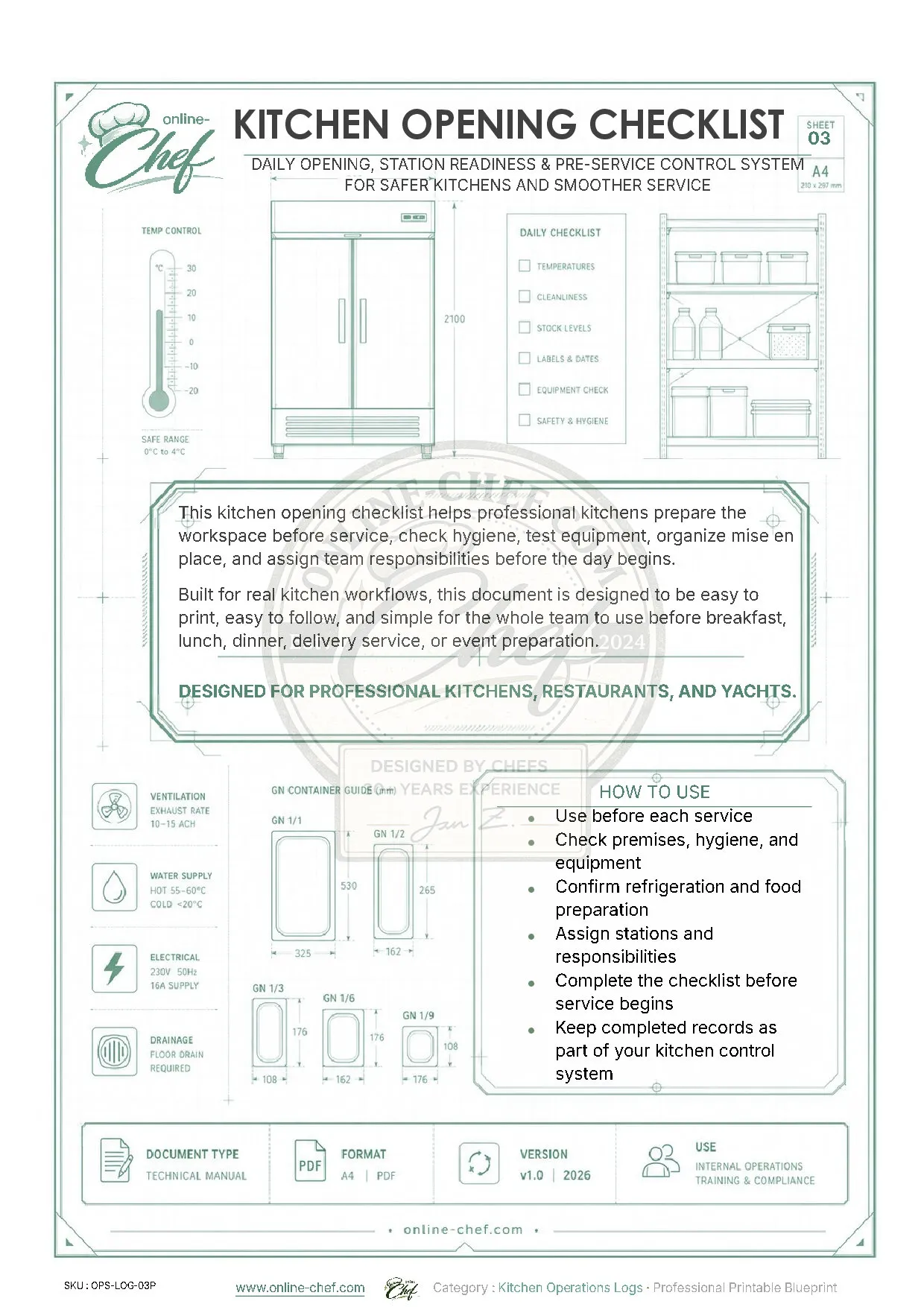
practical tool: Kitchen Opening Checklist
5. Establish Corrective Actions
Know What to Do When Something Goes Wrong
A good kitchen system does not stop at finding a problem. It explains what to do next. If a fridge is too warm, if a delivery arrives outside the safe range, if a product has no label, or if cross-contamination is suspected, the team needs a clear corrective action. Reject, isolate, recheck, continue cooking, discard, report, clean, relabel, or record the issue.
No panic. No improvisation. Clear action.
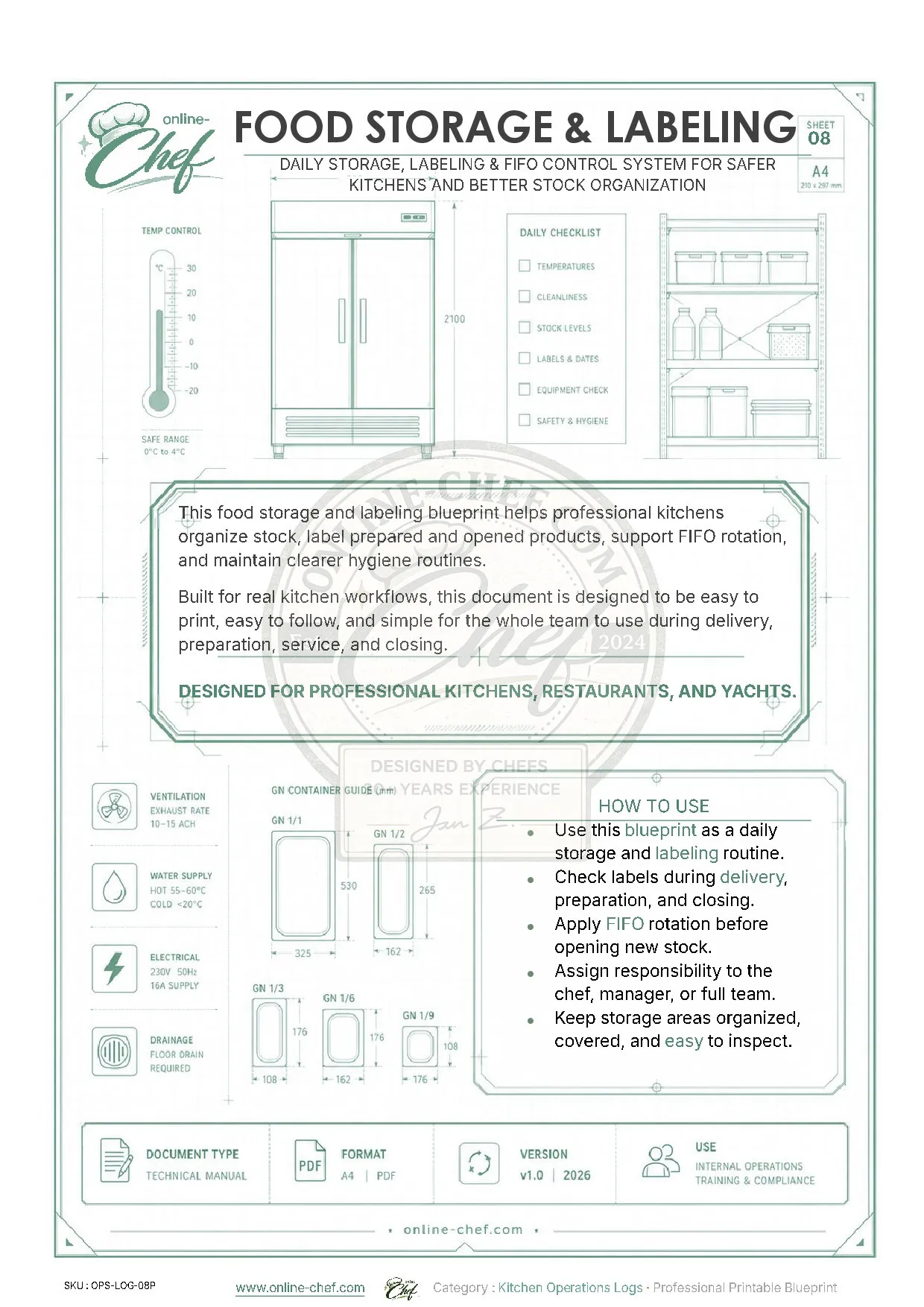
practical tool: Food Storage & Labeling Checklist
6. Establish Verification Procedures
Check That the System Really Works
Verification means reviewing whether the food safety system is actually being followed. This can include checking completed logs, reviewing cleaning records, testing thermometers, inspecting storage areas, confirming staff routines, and updating procedures when needed.It is the difference between having documents in a folder and having a real working kitchen system.
That is why Online-Chef documents are designed to be printable, practical, and usable during real service.
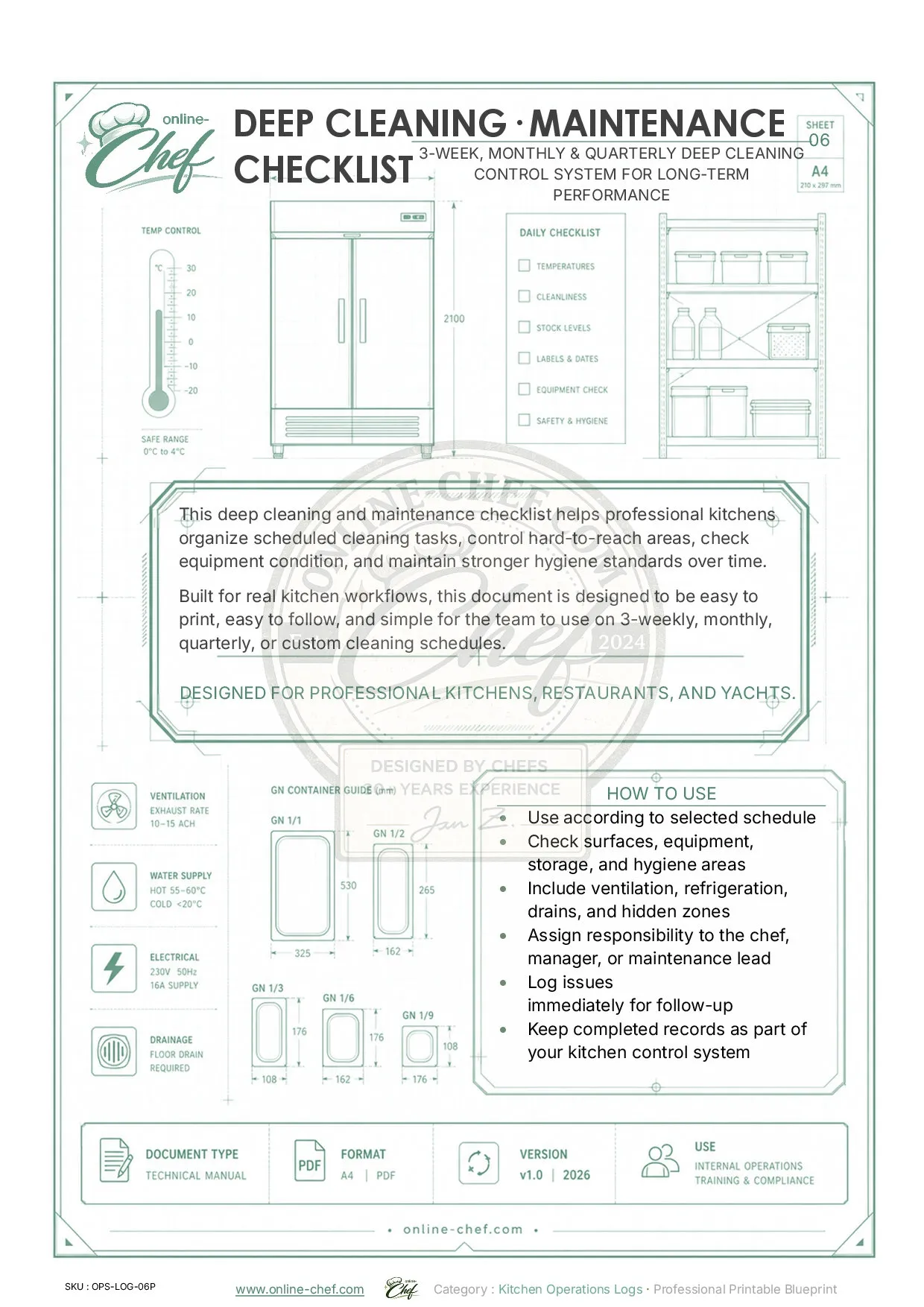
practical tool: Deep Cleaning Routines
7. Establish Record-Keeping and Documentation
Prove What Was Done
Food safety records help protect the business and support professional control. Temperature logs, delivery records, cleaning checklists, labeling checks, corrective action notes, and staff responsibilities all create proof that the kitchen follows structured routines. Good records should be simple, clear, dated, and easy to complete.
That is why Online-Chef documents are designed to be printable, practical, and usable during real service.
Online-Chef practical tool: Kitchen Closing Checklist